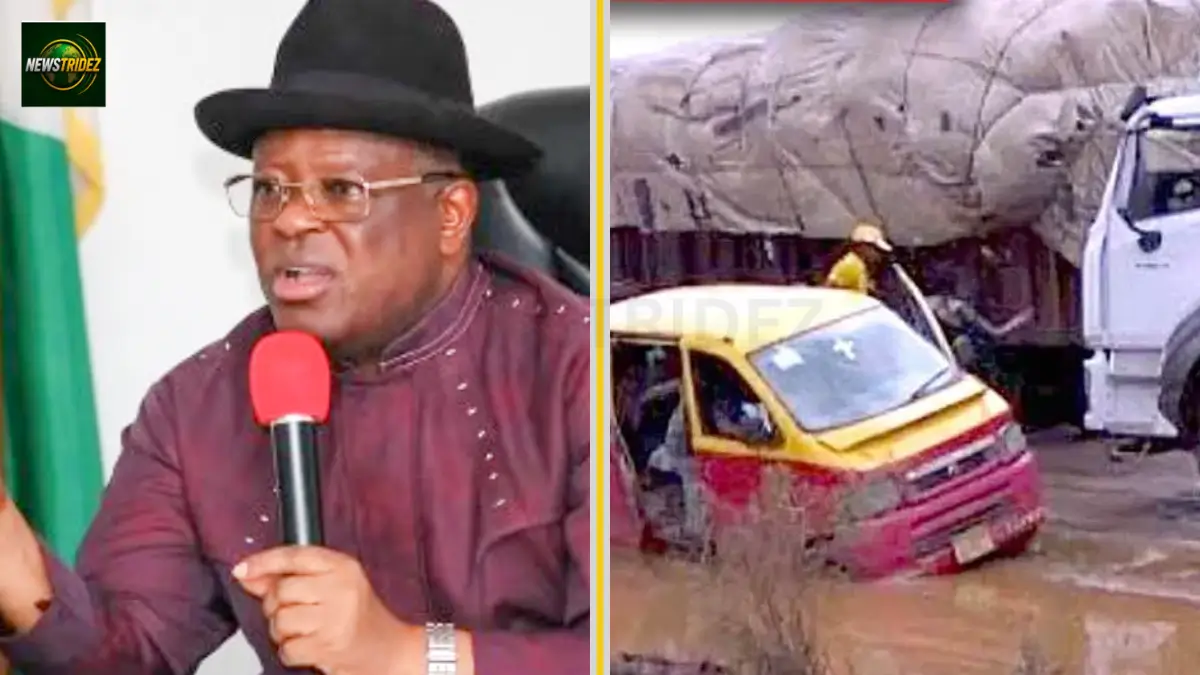
Benin-Asaba road users have received fresh hope of relief after Works Minister David Umahi ordered the concessionaire handling the highway to leave the project site, citing poor execution and worsening conditions. Umahi gave the directive on Wednesday, August 26, 2026, during a stakeholders’ meeting at the Edo State Government House in Benin City.
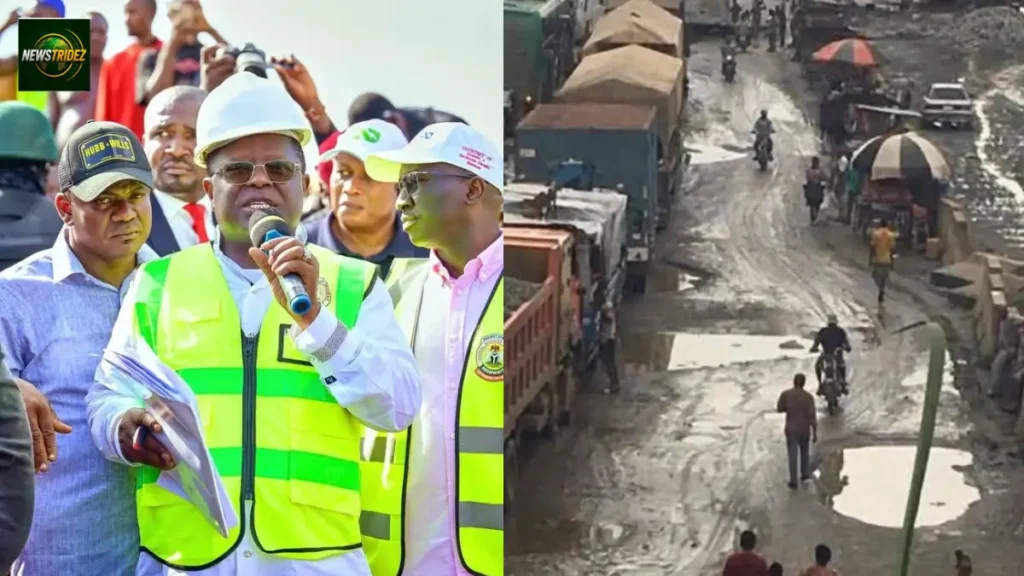
The minister asked the Benin-Asaba Expressway Concession Company to formally write to the Federal Government through the Ministry of Works so officials can begin the process of terminating the concession. He also ordered the company to immediately clear obstructions along the highway and restore free movement for motorists who have faced severe delays on the strategic corridor.
Umahi said the concessionaire had failed to add value to the project after 16 months of work. He also questioned its capacity to restore sections of the highway that deteriorated during construction. According to him, the government could no longer allow the situation to continue because the poor condition of the road had created serious hardship for commuters and raised concerns about possible public disorder.
The minister directed the Federal Ministry of Works to ask the project’s Independent Engineer to measure all work carried out so far. He said officials should exclude what he described as “negative work”, particularly areas where the concessionaire removed existing asphalt contrary to project specifications. Umahi said the government would also calculate the cost of correcting damage caused by such work before determining the financial value of the completed construction.
The Federal Government’s latest action follows days of public complaints over gridlock and failed sections of the 125-kilometre highway. The road links Benin City in Edo State with Asaba in Delta State and serves as a major transport route connecting parts of the South-South and South-East. Its deterioration has affected motorists, traders, transport operators and businesses that depend on the corridor to move people and goods.
Newstridez’s review of the latest government and media reports shows that the dispute centres mainly on the construction method used by the concessionaire. The project consultant, Engineer Toyin Akinlapa, said the company received advice to construct drainage facilities before removing existing asphalt but did not follow that sequence. The concessionaire, however, has blamed heavy rainfall and heavy traffic for some of the difficulties encountered during construction.
The concessionaire’s Chief Executive Officer, Samuel Daramola, said the company faced a difficult choice between constructing side drains and keeping traffic moving along the busy highway. He said the firm had carried out palliative work and expanded some sections, but heavy traffic forced workers to reopen sections before the work had fully cured, resulting in repeated repairs.
Umahi rejected the explanations and said the Federal Government had warned the concessionaire against removing asphalt from existing sections of the road. During an earlier inspection, he described the removal of asphalt without proper replacement measures as destruction of public property and directed Federal Controllers of Works to arrest contractors who completely remove asphalt from existing roads.
The minister has also directed the concessionaire to restore removed asphalt and redirect water that has been channelled onto the carriageway. He ordered the company to prepare a technical design for proper stormwater canalisation, while affected sections should undergo reconstruction under the supervision of the Independent Engineer. The measures aim to restore traffic flow while the government works out a longer-term solution for the highway.
Edo State Governor Monday Okpebholo expressed disappointment over the condition of the road, saying the situation had become unacceptable after 16 months. He described the project as a waste of resources and questioned the concessionaire’s capacity to complete the work. The governor also urged the Works Ministry to take decisive action, stressing that Edo residents and other road users were watching developments closely.
The Federal Government has not yet formally completed the termination process. Umahi’s directive requires the concessionaire to submit written approval before the government can proceed with the proposed arrangement, while the parties continue discussions over the contractual implications. The Head of Legal and Compliance of BAECC, Peterson Fabian, asked stakeholders to allow more time for engagement, saying the discussions had not reached a final conclusion.
The government has also outlined alternative ways forward. According to reports from the stakeholders’ meeting, one option would allow BAECC to retain a right of first refusal to operate and toll the road after government reconstruction. Another option would terminate the concession, while a third would allow BAECC to retain the tolling right but engage a competent contractor, with the Federal Government taking responsibility for design and supervision.
The road was concessioned to BAECC under the Federal Government’s Highway Development and Management Initiative. The project involves reconstruction and expansion of the highway, with the concessionaire expected to finance, build, operate and maintain the road before recovering its investment through tolling. The current dispute has now triggered wider calls for government to review how major highway concessions are awarded and monitored.
For Nigerians, the dispute goes beyond the contract itself. The Benin-Asaba corridor carries commuters, agricultural products, manufactured goods and commercial traffic between several southern states. Long delays on the route increase fuel consumption, vehicle maintenance costs and travel times, while poor road conditions can also raise transport fares and affect the price of goods reaching markets.
The House Committee on Works has also backed calls for a review of the concession arrangement. Chairman Akin Alabi said the government should examine similar agreements to prevent concessionaires without sufficient capacity from taking on major infrastructure projects. Senator Allwell Onyesoh, who serves on the Senate Committee on Works, also criticised the handling of the road and said the situation should serve as a lesson for future concessions.
The Federal Government now faces pressure to restore the highway quickly while resolving the contractual dispute with BAECC. Umahi has indicated that competent contractors could take over affected sections, while the Independent Engineer will assess the work already completed. President Bola Tinubu has also directed the Works Ministry to find solutions to the worsening condition of the corridor, according to the Presidency.
The Benin-Asaba road crisis is therefore moving into a new phase, with the Federal Government seeking either a new construction arrangement or a major change in the existing concession. For motorists and businesses, the immediate priority remains the same: clear the blockages, restore damaged sections and return the strategic highway to safe and reliable use while officials settle the wider contract dispute.