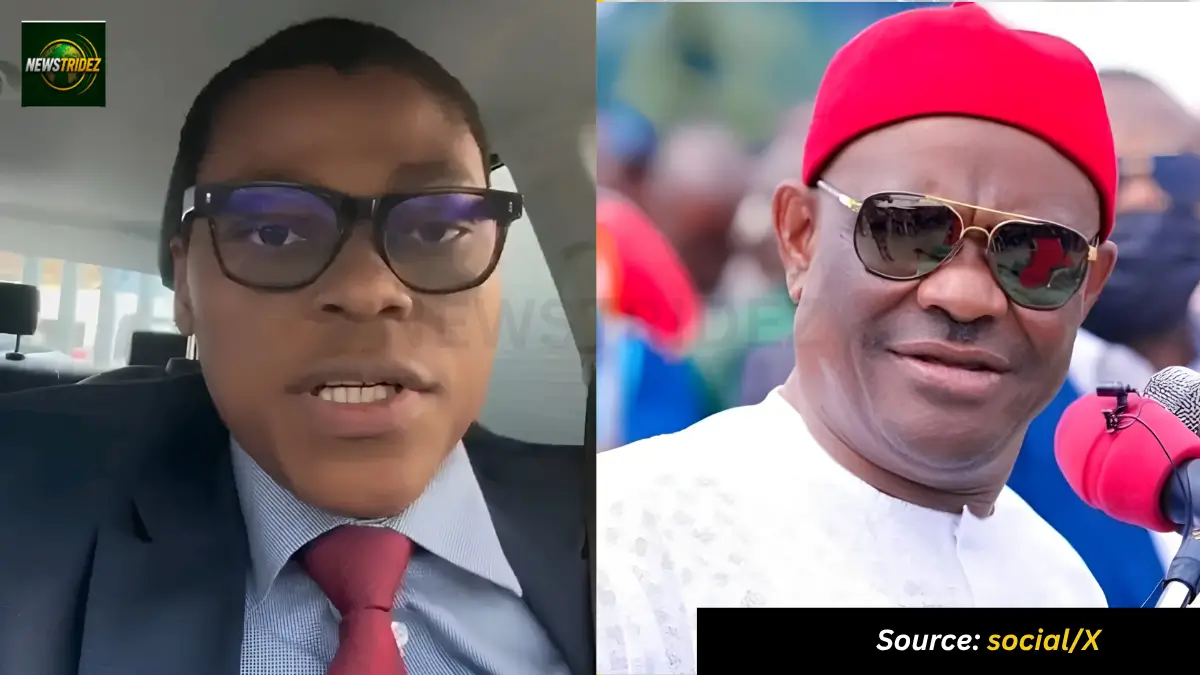
Wike 2031 ambition has become a fresh talking point after broadcaster Rufai Oseni said the FCT Minister is strategically positioning himself for a future presidential contest amid his dispute with APC governors.
ABUJA, NIGERIA — Arise Television presenter Rufai Oseni has claimed that Nyesom Wike, the Minister of the Federal Capital Territory, is playing a strategic political game because of a possible presidential ambition in 2031, as his disagreement with some APC governors continues ahead of the 2027 elections.
Speaking on Arise Television’s Morning Show on Monday, September 21, Oseni linked Wike’s current political positioning to a longer-term calculation. He said the former Rivers governor may be preparing for the period after the 2027 election, when he could seek a stronger role in national politics and potentially pursue the presidency.
Oseni’s comments came as tensions between Wike and governors elected on the platform of the All Progressives Congress continued to attract attention. Wike has accused some APC governors of working against him, while insisting that his political activity remains focused on supporting President Bola Tinubu’s 2027 re-election bid.
Newstridez reviewed Oseni’s remarks alongside recent statements from Wike and reports on the dispute and found that the 2031 claim is an analyst’s political assessment, not a declaration by Wike that he will contest the presidency in that year. Wike has publicly maintained his support for Tinubu’s 2027 campaign and has not announced a 2031 presidential bid.
The disagreement became more visible after Imo State Governor and Progressive Governors Forum Chairman Hope Uzodimma criticised Wike’s Rainbow Coalition and its relationship with the ruling party’s political structure. The APC governors have maintained that their campaign machinery should support APC candidates, while Wike has argued that his coalition can mobilise support for Tinubu without preventing other parties from fielding candidates.
Wike addressed the issue during a media chat earlier in September and specifically named Uzodimma and Kwara State Governor AbdulRahman AbdulRazaq among politicians he said were working against him. He also accused some politicians of being more interested in being seen as people working for the President.
Responding to the controversy, Wike said his immediate political priority was President Tinubu’s re-election. He argued that he could not afford to work against the President because a defeat in 2027 could expose him to political consequences from opposition figures.
“My concern is, I will support Mr President,” Wike said during the media chat.
Oseni, however, said the current alignment should also be viewed beyond 2027. He argued that Wike’s political calculations could extend into the following election cycle, particularly because the minister remains relatively young compared with some senior politicians who have previously sought the presidency.
The broadcaster said Wike had already contested for the presidency in the previous election cycle and suggested that his current political moves could help preserve his relevance after the 2027 election.
According to Oseni, the major political contest involving Wike could emerge after the 2027 election, particularly around the future of the Peoples Democratic Party and the minister’s role within the opposition party.
He questioned how Wike could help rebuild the PDP after the divisions surrounding the party in recent years. Oseni also pointed to Wike’s support for a faction within the PDP and his close working relationship with the Tinubu administration as factors that could shape his future political options.
The comments come as Wike continues to describe himself as a PDP stakeholder while supporting Tinubu’s re-election. The minister has repeatedly argued that backing Tinubu does not mean he has abandoned the PDP or joined the APC.
Wike’s Rainbow Coalition has consequently become one of the more closely watched political structures ahead of the 2027 elections. Reports have shown that some politicians from different parties have associated with the coalition, while APC governors have raised concerns about its possible impact on the ruling party’s campaign machinery.
Checks by Newstridez showed that Wike’s public position remains centred on 2027 rather than 2031. During his September media chat, he said his objective was to support Tinubu and argued that political circumstances made that position necessary. He did not announce plans to contest the presidency after Tinubu’s expected second term.
The disagreement with APC governors has therefore created two different readings of Wike’s activities. Wike presents his coalition as a vehicle for supporting Tinubu, while critics and analysts have questioned whether the structure could also help him maintain a national political network beyond the 2027 election.
Another recent report by The PUNCH said several aggrieved APC members and former party leaders had begun aligning with Wike’s Rainbow Coalition. The newspaper quoted an anonymous APC leader as describing the platform as an alternative route for dissatisfied politicians who could otherwise move towards the African Democratic Congress.
The report also said some APC figures believe Wike has maintained support from sections of the ruling party because of his influence and his declared support for Tinubu. Those claims came from unnamed party officials and represent their interpretation of the political situation.
Political analyst Jide Ojo offered another assessment of the dispute, describing the disagreement between Wike and APC governors as part of the wider political strategy surrounding the 2027 election. He said Tinubu could seek to prevent a serious rupture between the minister and the governors rather than openly choosing one side.
Ojo also pointed to Wike’s political influence in Rivers State during the 2023 presidential election. Official results showed that Tinubu received 231,591 votes in Rivers State, while he secured 66,406 votes in Imo State, where Uzodimma was governor. Ojo used the figures to discuss the different political weight attached to the actors involved.
The figures do not establish who will have greater influence in 2027, but they form part of the political argument around Wike’s relevance to Tinubu’s campaign. The minister himself has continued to stress his support for the President despite the dispute with some APC governors.
Data reviewed by Newstridez indicates that Wike has not publicly declared a 2031 presidential campaign, making Oseni’s statement a political interpretation rather than a confirmed electoral plan. Any future presidential bid would depend on decisions Wike and his political allies make after the 2027 elections.
For now, the minister remains a PDP figure serving in Tinubu’s cabinet and openly supporting the President’s re-election. His Rainbow Coalition also continues to operate across party lines, creating friction with APC governors who want the ruling party to maintain control of its campaign structure.
The dispute has also exposed a broader question about political alliances in Nigeria: whether politicians supporting the same presidential candidate can maintain separate party interests at state and legislative levels without creating competing campaign structures.
Wike has said political parties should remain free to field candidates for governorship and legislative elections, even as his coalition works to support Tinubu. APC governors, on the other hand, have stressed the need to protect the party’s candidates and structures ahead of 2027.
As the election approaches, the relationship between Wike, Tinubu and the APC governors is likely to remain under close watch. Any change in Wike’s party position, coalition structure or public statements after 2027 could provide clearer evidence about his longer-term political plans.
As at the time of filing this report, Wike 2031 ambition remains a claim made by Rufai Oseni rather than an announced plan by the FCT Minister. Wike continues to publicly back Tinubu for 2027, while his dispute with some APC governors and the activities of his Rainbow Coalition continue to shape political discussions around the next election cycle.