

Atiku Abubakar has challenged the Atiku N600bn cash transfers figures released by Tinubu’s government, questioning the number of households reached and demanding verifiable payment records.
ABUJA, NIGERIA — Atiku Abubakar, presidential candidate of the African Democratic Congress, has challenged the Federal Government’s claim that it disbursed more than N600 billion in cash transfers to vulnerable Nigerians, saying the figures do not match the government’s stated payment structure and beneficiary numbers. Atiku made the criticism through a statement issued by his Senior Special Assistant on Public Communication, Phrank Shaibu, on Thursday, August 27, 2026.
The dispute followed comments by Humanitarian Affairs and Poverty Reduction Minister Bernard Doro, who said the government had spent more than N600 billion on cash transfers since President Bola Tinubu assumed office. Doro said the programme had reached slightly more than 10 million households over three years and was designed to cushion poor and vulnerable Nigerians from economic hardship.
Atiku questioned how the government arrived at the N600 billion figure, pointing to the previously announced payment of N25,000 monthly for three months. According to his calculation, a household receiving all three payments would collect N75,000. If 10 million households received the full amount, the total would reach N750 billion, already higher than the government’s reported expenditure.
The former vice president said the discrepancy required the Federal Government to explain how many households received one payment, two payments or all three tranches. He also asked the government to account for failed transactions and reversals and distinguish between people listed on a social register and households that actually received money.
“A name on a social register is not a bank alert. Counting people in a database is not the same thing as proving money reached them.”
Atiku also pointed to what he described as conflicting figures from the Tinubu administration. He said the Presidency announced in July and again in early August that expanded cash transfers had reached 15 million vulnerable households. The minister’s latest figure, however, puts the number at slightly above 10 million households, creating a difference of about five million households that Atiku wants the government to explain.
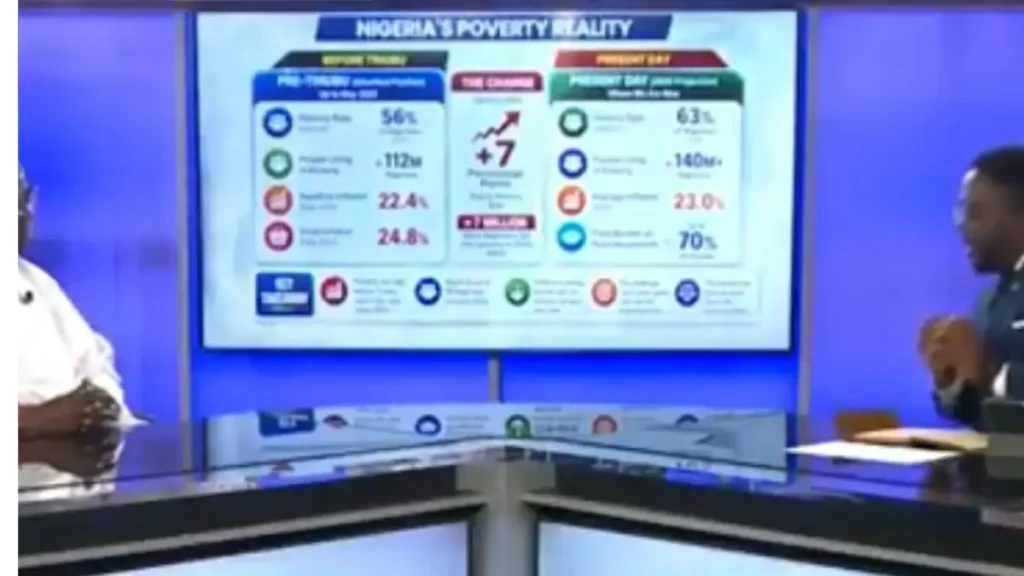
Doro’s recent statement provides the government’s current position. Speaking on Channels Television’s Politics Today, the minister said more than N600 billion had gone to cash transfers over three years and that the programme had reached slightly more than 10 million households. He argued that the intervention supported vulnerable families and defended the value of the N25,000 payments to Nigeria’s poorest households.
The minister did not, however, provide a specific number of Nigerians who had moved out of poverty because of the cash-transfer programme. Instead, Doro said the government was developing a system to track poverty more deliberately and measure progress among vulnerable households. He also said the Federal Government had launched a wider social-protection programme aimed at moving beneficiaries beyond short-term financial assistance.
The disagreement comes as the Tinubu administration expands its social-protection programme. The Federal Government recently unveiled the $1 billion Household Prosperity and Economic Social Protection Project, known as HOPE-SP, with plans to strengthen how vulnerable households receive support. The programme includes a one-off digital shock-response payment of N40,000 for eligible households, according to government information reported by Channels Television.
For ordinary Nigerians, the argument goes beyond political arithmetic. Cash transfers are intended to provide immediate relief to families facing high food, transport, energy and healthcare costs. Questions about the number of beneficiaries, the amount actually paid and the impact on household poverty therefore matter because they determine whether public funds are reaching the people the programme targets.
Atiku has argued that government should address the economic pressures that push households into poverty instead of relying mainly on cash assistance after families have already been affected. He linked the issue to his broader proposal for targeted intervention in the domestic petroleum sector, which he says could reduce fuel and transport costs and lower pressure on household budgets.
The former vice president said an effective anti-poverty programme should ultimately reduce the number of Nigerians who need emergency support. He accused the Tinubu administration of managing the effects of economic hardship rather than sufficiently addressing the pressures behind rising household costs. The Federal Government, meanwhile, continues to defend its economic reforms and social interventions as necessary steps towards long-term economic stability.
Newstridez reviewed the latest statements from Atiku and the Federal Government. The available reports confirm that Doro claimed more than N600 billion had reached slightly more than 10 million households, while Atiku has challenged the arithmetic and called for a detailed payment trail. The available reports do not independently establish that the government’s figure is false, nor do they provide a complete transaction-by-transaction record that resolves Atiku’s questions.
Atiku has therefore asked the government to publish details including verified beneficiary numbers, payment tranches, state-by-state distribution, failed transactions, reversals and an independent audit. Such information would allow Nigerians to compare the number of households listed as beneficiaries with the number of households that actually received payments and determine how the reported expenditure was calculated.
The controversy also comes as the 2027 presidential election approaches, placing the government’s poverty-reduction record under increasing political scrutiny. Atiku, now campaigning under the ADC platform, is positioning himself as an alternative to Tinubu and has repeatedly criticised the administration’s economic policies. The cash-transfer dispute gives the opposition another opportunity to question how the government has managed public funds and responded to hardship.
For the Tinubu administration, the challenge is now to provide clearer figures and evidence showing how the N600 billion was disbursed and how many households received the various payments. For Atiku, the issue offers another line of attack against the government’s economic record. The disagreement is unlikely to end until both sides provide more detailed evidence supporting their respective positions.
The Atiku N600bn cash transfers dispute now centres on a simple question: how much was actually paid, to how many households, and through how many payment rounds? The government says more than N600 billion reached over 10 million households, while Atiku says the figures require reconciliation. Further payment records, beneficiary data or an audit could provide the clarity Nigerians need as scrutiny of the programme continues.