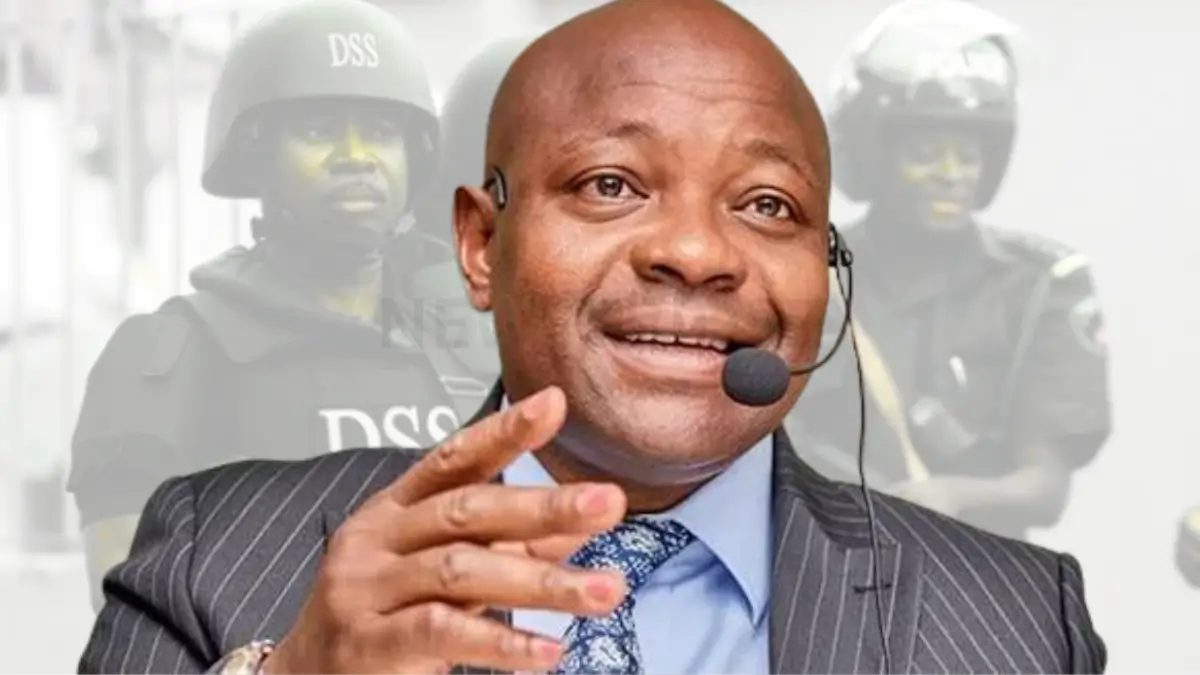
DSS civil matters directive has changed how operatives are expected to handle private disputes. Director-General Oluwatosin Ajayi says officers must not arrest people over purely civil cases.
ABUJA, NIGERIA — Director-General of the Department of State Services, Oluwatosin Ajayi, has directed DSS operatives not to arrest anyone over purely civil matters, saying such disputes should be taken to court instead. Ajayi disclosed the directive during a media interview published on Thursday, September 3, 2026, as he outlined reforms introduced under his leadership.
Ajayi said the directive forms part of reforms aimed at strengthening the agency’s respect for the rule of law and improving its human rights record. He identified five broad areas of reform: law enforcement, inter-agency cooperation, accountability, respect for human rights, and infrastructural and administrative improvements.
The DSS chief acknowledged that the agency had previously blurred the distinction between civil and criminal matters. He said his experience within the service showed that the two areas had sometimes been conflated, creating situations where security powers could be applied to disputes that should ordinarily go before the courts.
“You cannot apply the use of force in civil matters. Even some criminal matters don’t require force,” Ajayi said, stressing that the nature of a dispute should determine the appropriate response by security agencies.
Newstridez reviewed Ajayi’s interview and found that his directive goes beyond simply discouraging physical force. The DSS director-general said he had specifically told operatives that there should be no arrest in any civil case, signalling a preference for judicial processes where disputes do not involve criminal conduct or genuine national security concerns.
Ajayi cited the case involving political economist and academic Prof. Pat Utomi as an example of the approach. Utomi had faced scrutiny over allegations linked to an attempt to establish what authorities described as a “shadow government”.
Rather than arresting Utomi, Ajayi said the DSS sought judicial interpretation of the matter. According to him, the court subsequently ruled that the proposed arrangement was unconstitutional, illegal and a threat to national security.
The DSS boss also referred to a legal dispute involving the Socio-Economic Rights and Accountability Project, SERAP. He said the organisation had approached the court over allegations that two DSS operatives invaded its premises.
According to Ajayi, the DSS allowed the matter to proceed through the courts without making arrests. He said the court eventually awarded more than N100 million in favour of SERAP, presenting the case as another example of how disputes involving the agency could be handled through legal channels rather than detention.
The directive could have wider implications for Nigerians who approach the DSS over disagreements involving money, contracts, property, debts or other private disputes. Such cases can sometimes become complicated when one party attempts to involve security agencies in what may fundamentally be a civil disagreement.
Under the approach described by Ajayi, the existence of a disagreement would not by itself justify an arrest. Where the matter remains civil, the parties would instead be expected to seek legal remedies through the appropriate judicial process.
Ajayi also discussed the agency’s handling of disputes involving journalists. He said the DSS would rather approach the courts where necessary instead of arresting journalists over matters that could be resolved through legal proceedings.
The DSS director-general described journalists as the agency’s “professional colleagues”, explaining that both institutions deal with information but serve different audiences. He said journalists inform the public, while the DSS provides intelligence to the government, with such information remaining classified until it is officially declassified.
The position represents a notable emphasis on legal redress at a time when the DSS continues to handle cases involving national security, terrorism, kidnapping, organised crime and other serious offences. Ajayi’s comments, however, did not suggest that the agency would stop making arrests altogether.
Instead, the distinction he drew was between civil disputes and matters involving criminality or national security. The DSS retains its statutory responsibilities in cases where arrest and detention fall within the law.
Ajayi said even some criminal cases might not require force, suggesting that proportionality should also guide the agency’s response to criminal allegations. His comments point to an operational philosophy that places greater emphasis on determining the appropriate legal response before coercive measures are used.
The reforms also come amid continuing public scrutiny of Nigeria’s security agencies and concerns over arbitrary detention, abuse of power and respect for constitutional rights. The DSS has faced criticism over some past arrests and detentions, making human-rights safeguards a significant part of the agency’s public image.
Ajayi said his administration had introduced accountability measures alongside changes in law enforcement and human rights. He also indicated that personnel who engage in misconduct face disciplinary action and that the agency seeks to prevent former personnel from using the DSS name to commit crimes.
The DSS has separately continued to carry out arrests in cases involving serious security allegations. Its official media records, for example, show recent announcements concerning persons held in connection with security investigations. This means Ajayi’s new position should be understood as a directive concerning civil cases, rather than a blanket prohibition on arrests by the service.
For ordinary Nigerians, the distinction is important. A dispute over unpaid money, a commercial agreement or another private disagreement does not automatically become a security matter simply because one party reports it to the DSS. The appropriate forum may instead be a civil court, depending on the facts and applicable law.
The directive could also encourage greater clarity when complaints are submitted to security agencies. Investigators would need to establish whether an allegation involves a criminal offence, a national security issue or a dispute that belongs within the civil justice system.
Ajayi’s comments suggest that the DSS wants its coercive powers reserved for matters that genuinely require them. His emphasis on judicial interpretation in the Utomi matter and litigation in the SERAP dispute provides examples of the model he says the agency is adopting.
However, the effectiveness of the directive will ultimately depend on how consistently it is applied by operatives across the country. The DSS operates through commands and personnel in different locations, making enforcement of any institutional policy dependent on training, supervision and accountability.
As of the time of filing this report, the DSS had not announced a separate public document detailing the full operational guidelines behind the directive. Ajayi’s statements therefore provide the clearest public explanation of the policy and its intended application.
The development places renewed attention on the relationship between Nigeria’s security agencies, the courts and citizens’ rights. For Nigerians facing civil disputes, the message from the DSS leadership is clear: private disagreements should not be settled through arrest or the use of security force when the matter belongs before a court.
DSS Director-General Oluwatosin Ajayi has ordered operatives to stop arresting people over purely civil disputes and use judicial processes instead. The policy forms part of reforms he says are designed to strengthen accountability, human-rights protection and respect for the rule of law.