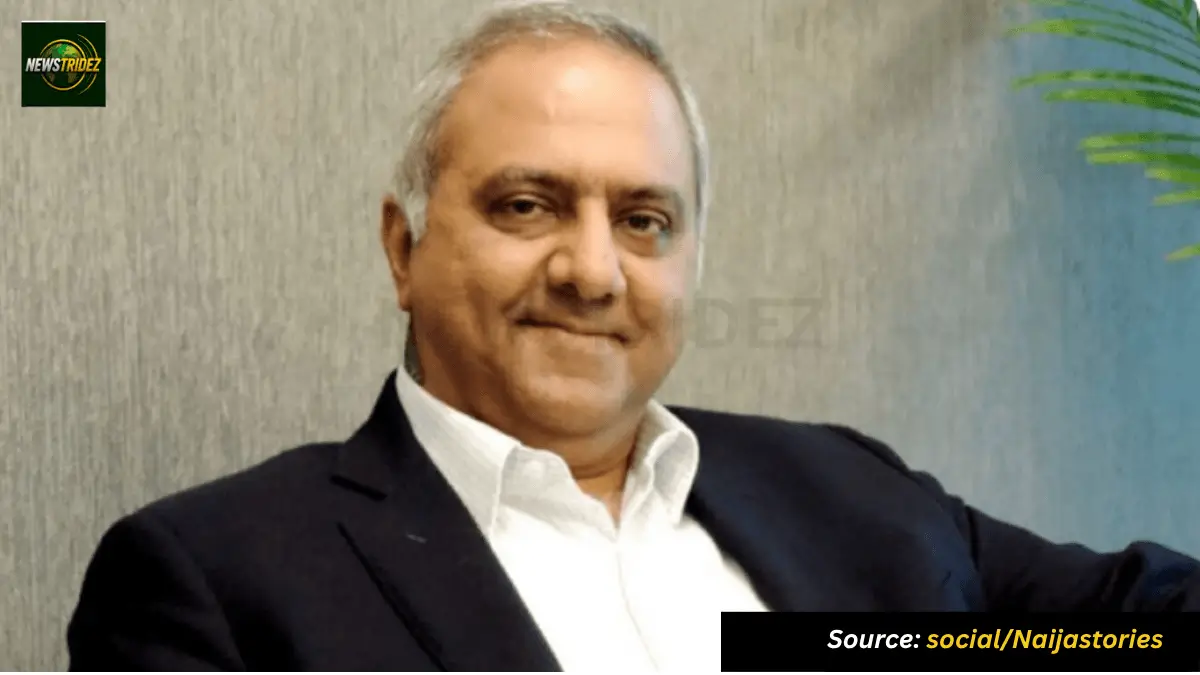
Haresh Aswani helped turn Indomie from an unfamiliar product into a Nigerian household name, as Tolaram expanded from noodles into food manufacturing, distribution and infrastructure after decades of investment.
LAGOS, NIGERIA — Haresh Aswani, a senior executive of Singapore-based Tolaram Group, has emerged as one of the key figures behind the company’s decades-long expansion in Nigeria, helping build a business that moved from importing Indomie noodles to manufacturing, distribution and major infrastructure projects.
According to Aswani, Tolaram’s Nigerian journey required patience because the company initially faced foreign exchange problems, weak infrastructure and an unfamiliar market. The group eventually shifted from importing finished products to manufacturing locally, adapting flavours to Nigerian tastes and building its own distribution network.
The story began decades before Indomie became a staple in Nigerian homes. Tolaram had established a presence in Nigeria as a trading business, and Aswani joined the group in the 1980s. The company later identified food as a sector with dependable demand and began looking for products that could fit changing lifestyles in Nigerian cities.
Newstridez reviewed Tolaram’s corporate history and interviews with Aswani and found that the Indomie success did not begin with immediate mass acceptance. The company started importing Indomie noodles into Nigeria in 1988, but local production only began in 1996. Reports also show that the venture made losses between 1996 and 2001 before the product gained wider acceptance among Nigerian consumers.
That early struggle is important because instant noodles were not an established Nigerian meal when Tolaram entered the market. Aswani has recalled that some Nigerians initially did not understand the product and that the company had to spend considerable time introducing consumers to noodles through sampling and demonstrations.
The company also changed the product to suit local preferences. Aswani said Nigerians generally preferred spicy meals and food with meat, prompting Tolaram to develop flavours suited to the Nigerian palate. The company’s chicken flavour eventually became a major seller, helping Indomie move from a foreign product into an everyday meal for millions of households.
The strategy went beyond the product itself. Tolaram recognised that selling consumer goods in Nigeria required reliable access to shops, markets and customers across a country with major transport and infrastructure challenges. The company therefore invested in logistics, haulage and distribution instead of relying entirely on outside providers.
According to Aswani, deep distribution became one of Tolaram’s major competitive advantages because many African consumers buy goods through small shops, open markets and neighbourhood retailers. The company developed a distribution network that allowed its products to reach consumers beyond major supermarkets and shopping centres.
That approach helped the group expand beyond noodles. Dufil Prima Foods, the company behind Indomie in Nigeria, developed businesses covering noodles, seasoning, pasta, wheat flour, snacks, vegetable oil and other food products. A Securities and Exchange Commission prospectus also identified Haresh Aswani as chairman of Dufil Prima Foods and described his long involvement in establishing Tolaram’s Nigerian manufacturing and joint-venture operations.
Tolaram’s expansion also brought partnerships with major international companies. The group entered ventures involving brands and businesses associated with companies such as Indofood, Kellogg, Arla Foods and Colgate-Palmolive. That strategy allowed the company to move beyond a single product while keeping its focus on manufacturing and distribution in African markets.
The company’s portfolio eventually reached sectors outside packaged food. It moved into palm oil, logistics, power, real estate and infrastructure, with the Lekki Deep Sea Port becoming one of its most ambitious projects in Nigeria.
The port represented a major change in scale. BusinessDay reported that Tolaram’s involvement grew from its experience dealing with distribution and logistics problems, while the company saw port infrastructure as a way to address a bottleneck affecting businesses importing and exporting goods through Nigeria.
The Lekki port project eventually cost about $1.5 billion, according to BusinessDay, and began commercial operations in 2023. Tolaram has also been involved in the wider Lagos Free Zone project around the port.
Data reviewed by Newstridez shows that Tolaram’s Nigerian business has grown far beyond the original Indomie operation. The Singapore Foreign Ministry identifies Aswani’s key Nigerian business interests as food manufacturing, logistics and distribution, power, real estate and the country’s largest private deep-sea port project.
Recent reporting has also placed the scale of Tolaram’s African operations above $1 billion annually. In a 2026 interview, Aswani said the group does more than $1.2 billion to $1.3 billion in business per year, while stressing that Africa should be viewed as a long-term opportunity rather than a quick investment.
That figure is worth separating from claims that the company generates $2 billion in revenue. The sources reviewed by Newstridez support annual business activity above $1.2 billion, but do not establish a current $2 billion revenue figure for the entire Nigerian operation. The distinction matters when measuring the actual scale of the business.
Aswani’s own explanation for Tolaram’s endurance centres on patience. He has repeatedly described Nigeria as a long-term market and said companies entering Africa should be prepared to remain committed despite difficult periods, foreign exchange shortages and changes in government policy.
That experience became particularly important during Nigeria’s foreign exchange crises. Tolaram responded by increasing local manufacturing and sourcing, which reduced its dependence on importing finished goods. The approach also created more opportunities for local production and allowed the company to manage some of its currency risks.
The company also pursued backward integration. Tolaram invested in businesses supplying raw materials and supporting its manufacturing operations, including palm oil, flour, seasonings and other parts of the production chain. It also expanded logistics and distribution capacity to improve the movement of goods from factories to retailers.
For Nigeria, the economic effect extends beyond the popularity of Indomie. Dufil has created manufacturing operations and supported a network of suppliers, distributors, retailers and transport operators. In 2019, Dufil said its palm oil plantation project in Edo State formed part of its backward integration strategy for supplying raw materials to its businesses.
The company’s approach also reflects a wider lesson about Nigeria’s consumer market. Products that succeed nationally often need to match local tastes, local purchasing habits and the realities of distribution. Tolaram’s experience shows how companies can spend years building those systems before reaching the scale associated with major consumer brands.
The Indomie story also demonstrates the difference between creating demand and simply entering an existing market. When Tolaram arrived, instant noodles had not yet become the everyday food Nigerians know today. The company had to educate consumers, develop local flavours, build production capacity and ensure the product was available in neighbourhood shops.
Aswani’s role has consequently extended beyond the noodle brand itself. The Singapore government identifies him as managing director of Tolaram Group and notes his involvement in several Nigerian businesses. He also serves as Singapore’s Honorary Consul-General in Lagos, a position he has held since 2006.
Tolaram’s infrastructure investments further show how the company responded to problems it encountered in its core consumer business. Instead of treating poor logistics and port congestion only as external problems, the group invested in systems it believed could improve the wider operating environment.
BusinessDay reported that Aswani’s team saw the Lekki port as a response to the logistics challenges businesses faced in Nigeria. The project took years to complete and passed through several stages before becoming operational, reinforcing the company’s emphasis on long-term investment.
The business has therefore developed through several stages: importing products, manufacturing locally, adapting products to Nigerian consumers, expanding distribution, integrating raw-material supply and eventually investing in infrastructure. Each stage addressed a problem encountered during the previous stage.
For Nigerian entrepreneurs and foreign investors, the story also offers a picture of how difficult markets can reward companies that remain focused on customer needs. Tolaram did not build its Nigerian presence through a single product launch; its growth came through years of manufacturing, distribution, partnerships and investment.
Aswani has continued to describe Nigeria as a market worth staying in despite its challenges. In a 2026 interview, he said Tolaram’s experience showed that Africa should be treated as a long-term game and that companies able to survive Nigeria’s difficult operating conditions could find opportunities elsewhere on the continent.
As at the time of filing this report, Haresh Aswani remains closely associated with Tolaram’s African operations, while the group’s Nigerian interests extend from consumer goods to logistics and infrastructure. Available sources support annual business activity above $1.2 billion, but Newstridez could not independently verify the wider $2 billion revenue claim attached to the latest online version of the story.
The next phase of the Tolaram story will depend on how the group expands its consumer brands, manufacturing capacity and infrastructure interests across Nigeria and Africa. For Aswani, the central message from more than three decades in Nigeria remains clear: building a major consumer business takes time, local understanding, reliable distribution and the willingness to stay through difficult periods.
School of Hard Knocks interviewed Indomie’s CEO who is Indonesian. He said they also own Dano, Kellogg’s, Hypo, Lush, Guinness & Malt. Their biggest competitor is Nestlé, which owns Maggi. He came to Nigeria for a holiday, and they now generate $2B in revenue. 😳 pic.twitter.com/WWvwWPUrqM
— carter🌚 (@carter8f) September 19, 2026