
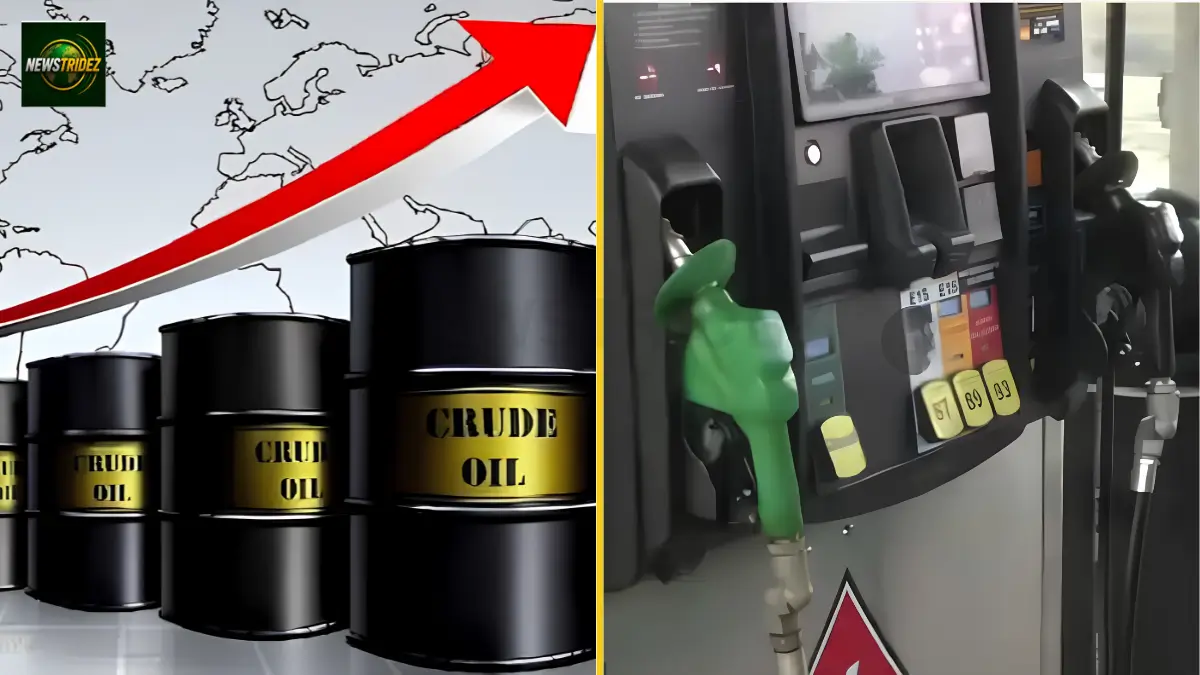
Crude rises above $109 as renewed Middle East tensions push global oil prices higher, while Nigerian motorists face petrol prices of up to ₦1,470 per litre in some locations.
LAGOS, NIGERIA — Brent crude has climbed above $109 per barrel as fresh disruptions to Middle East oil supplies send global energy prices higher, while petrol prices in Nigeria have surged to as much as ₦1,470 per litre in some locations.
According to market reports, Brent crude rose sharply after attacks disrupted Saudi Arabia’s East-West pipeline, raising fears about the amount of oil available to global markets. The supply concerns came as the wider Middle East conflict continued to threaten energy infrastructure and shipping routes.
Data reviewed by Newstridez shows that the latest oil movement is already feeding into Nigeria’s downstream petroleum market, where the cost of petrol has moved higher in recent days. Dangote Petroleum Refinery reportedly increased its gantry price from ₦1,265 to ₦1,350 per litre from September 12, an ₦85 increase.
The increase has placed fresh pressure on marketers and motorists, with reports showing that pump prices have reached about ₦1,470 per litre in some parts of the country. Diesel prices have also risen sharply, adding further pressure on transport operators, manufacturers, farmers and businesses that depend on generators and other diesel-powered equipment.
The international market has moved quickly. Brent crude reached about $109.80 during Monday’s trading before easing from the intraday high, while other market data put Brent above $107 later in the session. West Texas Intermediate also crossed the $100 mark as investors assessed the growing threat to global oil supplies.
The immediate concern for Nigeria is that higher crude prices do not automatically translate into cheaper petrol for consumers. Although Nigeria produces crude, the domestic fuel market still responds to international crude prices, exchange-rate movements, refining costs, logistics and other market conditions.
The latest increase also comes at a difficult time for households. Transport fares, food prices and the cost of moving goods have remained sensitive to petrol prices since the Federal Government removed the petrol subsidy. Another sustained increase could therefore raise operating costs for businesses and put additional pressure on household budgets.
Newstridez reviewed current petrol-price reports and global oil-market data and found that the latest increases are occurring alongside a sharp rise in international crude prices rather than in isolation. Brent has moved from the low-$100 range to above $109 as traders price in the risk of further supply disruption.
The Saudi pipeline disruption has become one of the main drivers of the latest rally. Reports said attacks forced Saudi Arabia to shut its East-West pipeline, a major route that allows the kingdom to move crude from the Persian Gulf towards the Red Sea while avoiding the Strait of Hormuz.
The pipeline shutdown has raised concerns about a possible reduction in Saudi oil exports if the disruption lasts long enough. Market participants are also watching the Strait of Hormuz, through which a large share of global oil shipments normally passes, as the regional conflict creates fresh uncertainty around maritime traffic.
For Nigeria, the development creates both a potential benefit and a problem. Higher crude prices can increase government oil revenue and improve foreign-exchange inflows if production remains strong. However, higher international energy costs can also push up domestic fuel prices and increase inflationary pressure.
Nigeria’s crude production has improved this year, with recent reports putting output at around 1.84 million barrels per day. Higher production combined with stronger crude prices could therefore improve government earnings, although the actual benefit will depend on production levels, costs, crude grades and the country’s wider fiscal position.
The pressure is not limited to petrol. Diesel users have also faced sharp increases, with reports putting diesel prices around ₦2,000 per litre in some areas. That matters because many Nigerian businesses rely on diesel-powered generators, trucks and machinery to keep operating.
Manufacturers, transport operators and farmers could feel the impact quickly if the higher prices persist. Businesses may pass increased transport and energy costs to consumers, while farmers could face higher expenses for moving crops, operating machinery and distributing produce.
The latest movement also places renewed attention on domestic refining. The Dangote Refinery has become a major part of Nigeria’s fuel supply system, and its pricing decisions now have a direct effect on marketers and consumers across the country. The refinery raised its petrol gantry price to ₦1,350 per litre on September 12.
At the same time, the refinery’s recently launched public share offer has put the company under even closer public attention. Investors are now watching both its commercial performance and its role in Nigeria’s petroleum market as global crude prices remain unstable.
Data reviewed by Newstridez indicates that the current oil-price movement is being driven mainly by supply fears rather than a sudden increase in global demand. The attacks on energy infrastructure and continuing uncertainty around Middle East shipping routes have made traders more cautious about future crude availability.
The global impact could become wider if the conflict continues. Higher oil prices can increase transportation and production costs around the world, pushing inflation higher and making it harder for central banks to reduce interest rates. Reports have already linked the oil shock to rising concerns about inflation and borrowing costs.
For Nigerian consumers, however, the most immediate concern remains the price at the filling station. Any further increase in petrol prices could affect transportation costs, food distribution, school runs and the daily cost of doing business.
The Federal Government and petroleum marketers will therefore face pressure to monitor developments closely as the international market responds to the Middle East crisis. A sustained oil rally could keep domestic fuel prices elevated, while any easing of geopolitical tensions could reduce some of the pressure.
As at the time of filing this report, crude rises above $109 had coincided with fresh increases in Nigerian petrol prices, with some motorists paying about ₦1,470 per litre. Brent crude remained highly volatile as investors watched the Saudi pipeline disruption and the wider Middle East conflict for signs of further supply problems.
The next few days will be important for both the global oil market and Nigerian consumers. If supply disruptions deepen, crude could remain elevated and add more pressure to petrol and diesel prices. But if tensions ease and disrupted supplies return, the market could pull back from its current highs.