
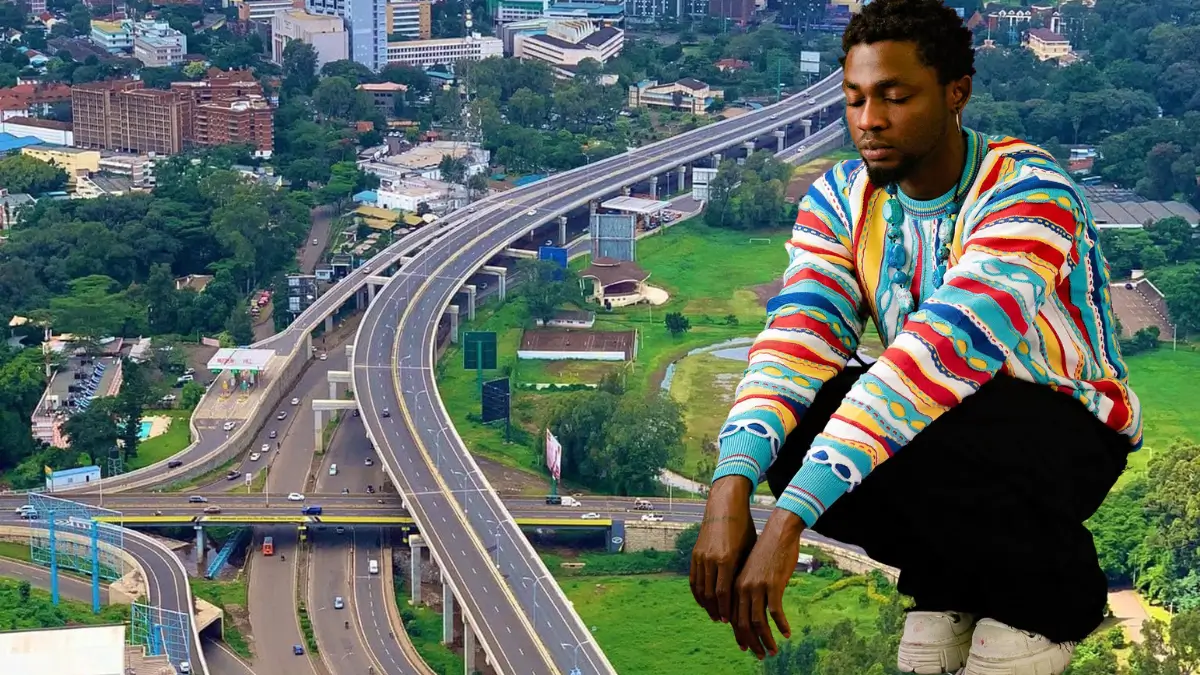
Omah Lay has opened up about growing up in Nigeria’s trenches, reflecting on the millions who may never escape poverty, reach places like Lekki or travel abroad.
PORT HARCOURT, RIVERS STATE — Nigerian singer Omah Lay has reflected on his upbringing in Port Harcourt, describing the difficult conditions he experienced before his music career took him beyond Nigeria. The singer said he spent the first 23 years of his life in that environment and warned that many people remain trapped in similar conditions throughout their lives.

The comment has sparked conversation about poverty, social mobility and the sharp differences between Nigerian communities. Omah Lay’s reflection focused on people who grow up in poor neighbourhoods, raise families there and may never experience affluent areas such as Lekki or travel outside the country. His remarks also drew from his own experience growing up in Port Harcourt before his music career changed his circumstances.
The singer has previously spoken openly about his childhood in Port Harcourt and the conditions that shaped his outlook. In a 2023 interview with Complex, he said the city accounted for a large part of who he became and described himself as someone who did not grow up with a “rich kid vibe.” He specifically recalled living in “face-me-I-face-you” accommodation and experiencing the toughness associated with life in the Niger Delta.
Omah Lay, whose real name is Stanley Omah Didia, was born and raised in Port Harcourt before moving further into the music industry. His early experiences became part of the story behind his rise, particularly as his songs began connecting with young Nigerians dealing with heartbreak, financial pressure, uncertainty and the search for a better life.
In his earlier interview, the singer explained that growing up in Port Harcourt influenced not only his personality but also his music. He credited the city’s culture, speech patterns and musical traditions with helping shape his songwriting. According to him, artists from Port Harcourt often carry a distinct style in their lyrics, something he believes also appears in his own work.
His latest reflection therefore goes beyond a celebrity discussing his childhood. It touches on a reality familiar to millions of Nigerians who grow up in low-income communities where basic opportunities can remain limited. For some young people, moving to a more affluent part of the same city can feel like travelling to another country, while international travel remains completely outside their plans.
The mention of Lekki is also significant because the Lagos neighbourhood has become widely associated with Nigeria’s wealthier urban class, luxury housing, entertainment and access to high-end services. Omah Lay’s comparison points to the economic gap between different parts of the country, where two Nigerians can live within the same state or city but experience completely different standards of living.
Newstridez‘s review of Omah Lay’s earlier comments shows that his story has consistently been connected to his Port Harcourt upbringing. In his Complex interview, he said the city was “95%” of the reason he had become the person he was, pointing to the community, language, music and challenges he encountered while growing up there.
The singer also described the environment as one that forced young people to become tough. He linked the experience to the wider difficulties associated with parts of the Niger Delta and said those conditions helped shape the resilience reflected in his personality and music. His comments suggest that his understanding of hardship did not come from observation alone but from years of direct experience.
Omah Lay’s rise has since taken him far beyond the surroundings he described. His international profile grew after the release of projects including Boy Alone, while songs such as “Soso” helped establish him as one of the Nigerian artists connecting strongly with audiences at home and abroad. He has also worked with international stars, including Justin Bieber, further expanding his reach.
That journey provides the contrast behind his latest observation. Someone who once described himself as a young man from the trenches now performs for audiences around the world. But his comments suggest that personal success does not erase memories of where someone came from, or the reality faced by people who never get the same opportunity to leave.
The broader issue remains social mobility. Nigeria has a large young population, but access to quality education, stable employment, housing and other opportunities varies sharply by income and location. For young Nigerians living in disadvantaged communities, the challenge is often not simply becoming wealthy but finding the first realistic opportunity to move into a better economic situation.
Omah Lay’s story also shows why entertainment figures can influence conversations beyond music. His personal experience gives his comments a human angle, while his large audience means discussions about poverty and opportunity can reach people who may not normally engage with economic or social policy debates.
For many Nigerians, the most striking part of the singer’s reflection is the possibility that someone can spend an entire lifetime in the same difficult environment without ever imagining another way of living. His comments have therefore opened a wider conversation about aspiration, inequality and what it takes for young Nigerians to break away from the circumstances into which they were born.
Omah Lay has now moved from the Port Harcourt environment he once described as the trenches to an international music career, but his reflection keeps attention on those who remain behind. The question for Nigeria is whether more young people can gain the education, jobs and opportunities needed to change their own circumstances rather than simply dream about doing so.
Read: Veteran Nollywood Actors Who Have Battled Serious Health Challenges