Peter Obi has challenged fresh debt claims by Charles Soludo’s administration, presenting handover documents on live television and disputing how Anambra’s external loan figures were calculated.
LAGOS — Former Anambra State Governor Peter Obi has challenged the Peter Obi debt claims made by Governor Charles Soludo’s administration, presenting his 2014 handover documents during an Arise TV interview on Thursday and insisting that he left the state without unpaid salaries, pensions or verified contractor obligations.
According to Obi, the central dispute is not simply whether Anambra had financial obligations but how development facilities supported by the Federal Government and international institutions were classified. He maintained that he did not personally approach financial institutions to borrow money for the state during his eight years in office and argued that the current presentation of the figures amounted to what he described as “wrong public accounting.”
The controversy followed the release of loan records by the Anambra State Government, which said facilities associated with projects undertaken during Obi’s administration amounted to about $123.77 million, with $92.35 million still outstanding as of June 30, 2026. The government linked the facilities to projects covering areas including education, health, agriculture, erosion control and community development.
However, the figures have since come under further scrutiny. The state’s Commissioner for Information and Value Reorientation, Law Mefor, later acknowledged on Arise TV that he had not properly verified how much was actually drawn from a $123 million World Bank facility before the government cited the full amount in its argument. He said DMO records indicated that about $30 million had actually been drawn from the facility and that he would seek further confirmation.
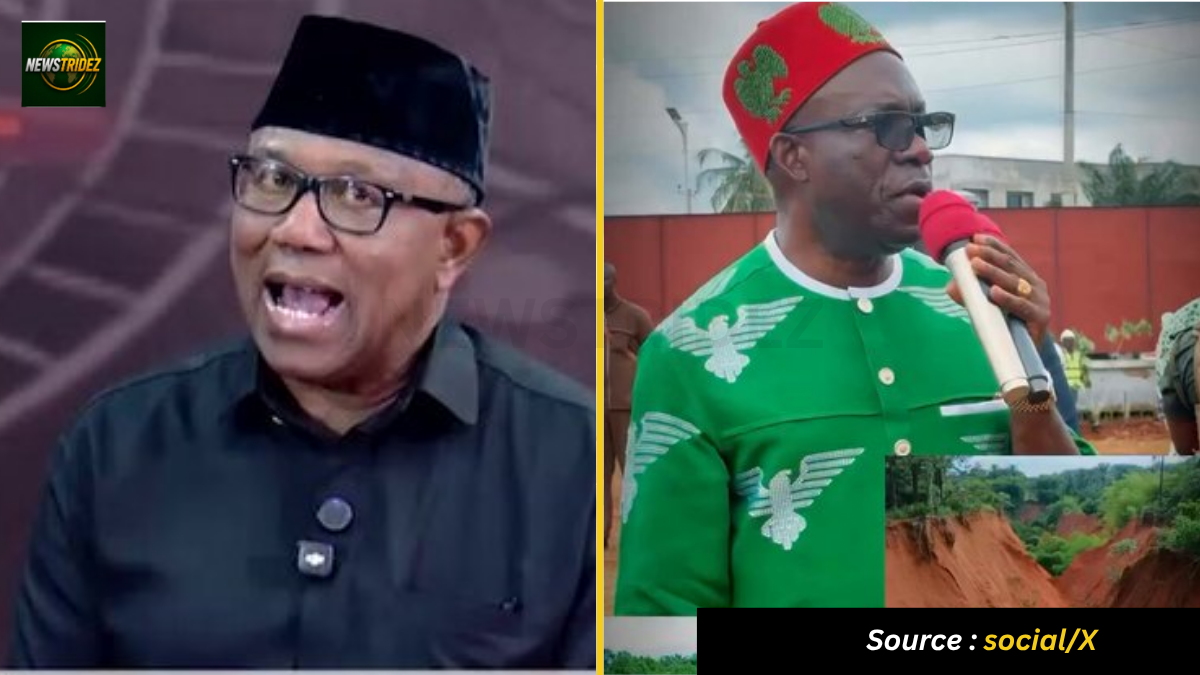
Obi, speaking on Arise TV’s Prime Time, pointed to his handover documents as evidence of the financial position he said he left behind in March 2014. He displayed the document during the interview and said it contained details of cash, investments and foreign-currency holdings, including bank statements supporting the dollar component of the funds.
“This is my handover document,” Obi said, urging authorities and the public to examine the records and verify the figures with the banks and relevant institutions.
The former governor also said he left more than $150 million in investments and funds, which he claimed generated about $10 million annually. He argued that even if the state had carried the external obligation being discussed at the time he left office, the investment income could have been used to service it while preserving the principal.
Obi further disputed the description of the World Bank and International Fund for Agricultural Development facilities as loans he personally obtained. According to him, many of the programmes were concessionary development facilities secured through the Federal Government and subsequently made available to states for approved projects, with repayment periods extending over several decades.
The former governor also gave a different account of Anambra’s external debt position at the time he assumed and left office. He said the state’s foreign debt stood at about $18 million when he became governor and rose to roughly $30 million by the time he handed over in March 2014. He added that the figure stood at about $45 million by December 2014, nine months after his departure.
Available DMO records cited in the ongoing debate provide some context to that claim. A DMO-related record cited in recent reporting puts Anambra’s external debt at about $30.323 million as of December 31, 2013, classified as multilateral debt. That figure is materially different from treating the entire $123.77 million value of facilities as an amount that had already been drawn and left as debt at the point of handover.
The Anambra Government, however, has maintained that the broader issue extends beyond the amount drawn from individual facilities. The administration has also disputed Obi’s claim that he left no unpaid obligations, saying it inherited arrears involving pensions, gratuities and salaries. The government said it had cleared about N22 billion in inherited gratuity arrears involving retired state and local government workers and teachers, while alleging that some legacy obligations remained.
The state has specifically raised the issue of workers linked to the former Anambra Water Corporation. Government officials have alleged that salary arrears involving the corporation remained unresolved during Obi’s tenure. Obi, however, argued that the corporation was an agency outside the category of workers whose salaries were paid directly through the state government payroll and rejected the broader claim that he left salary, pension and gratuity obligations unpaid.
Meanwhile, the dispute has taken on wider political significance because Obi is now a presidential candidate for the 2027 election. Obi said he did not regard the issue as a personal quarrel with Soludo and urged governors to allow political candidates from different parties to campaign freely. Soludo, who has also maintained that the state government is simply presenting financial records, has not accepted Obi’s broader account of the obligations inherited from his administration.
For Nigerians following the dispute, the key issue remains the distinction between the total value of development facilities, the amount actually drawn, the amount outstanding, and the legal structure through which the facilities were obtained. The available records show that these figures are not interchangeable, while both sides continue to rely on different aspects of the financial history to support their positions.
As at the time of filing this report, the disagreement remains unresolved, with Obi calling for the relevant handover records, bank statements, World Bank records and debt data to be examined. The Anambra Government’s figures and explanations remain part of the public record, while further verification of the drawdowns and obligations would help clarify how much of the facilities was actually accessed during Obi’s tenure and what liabilities remained at handover.