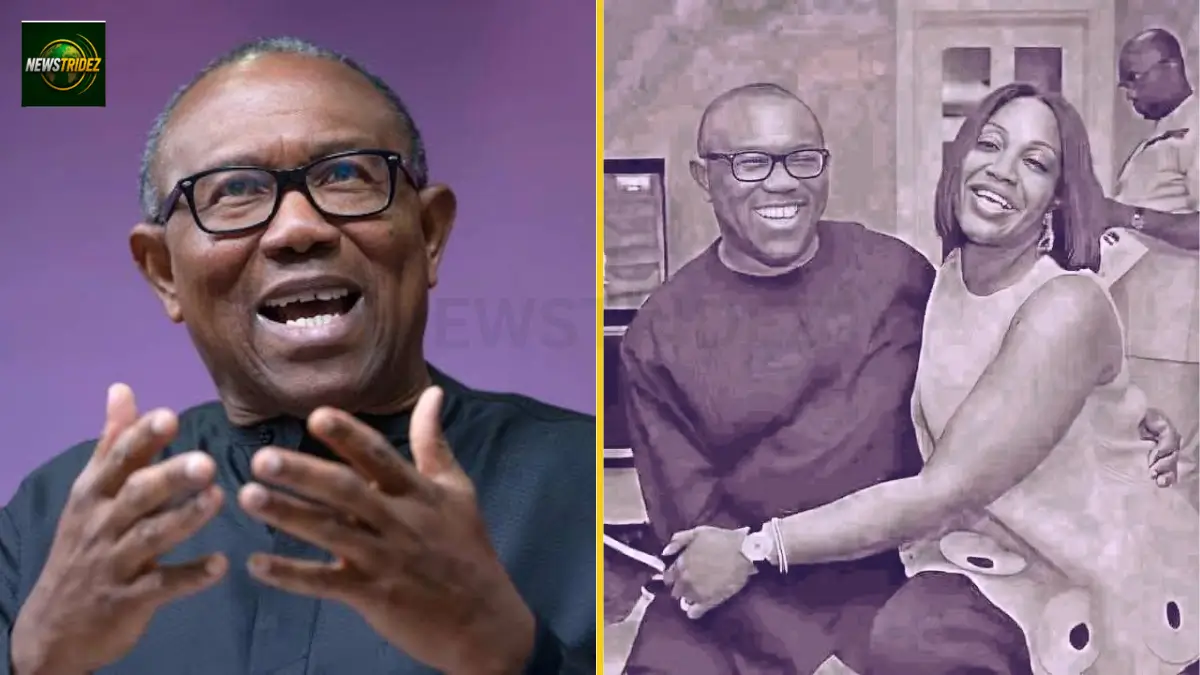
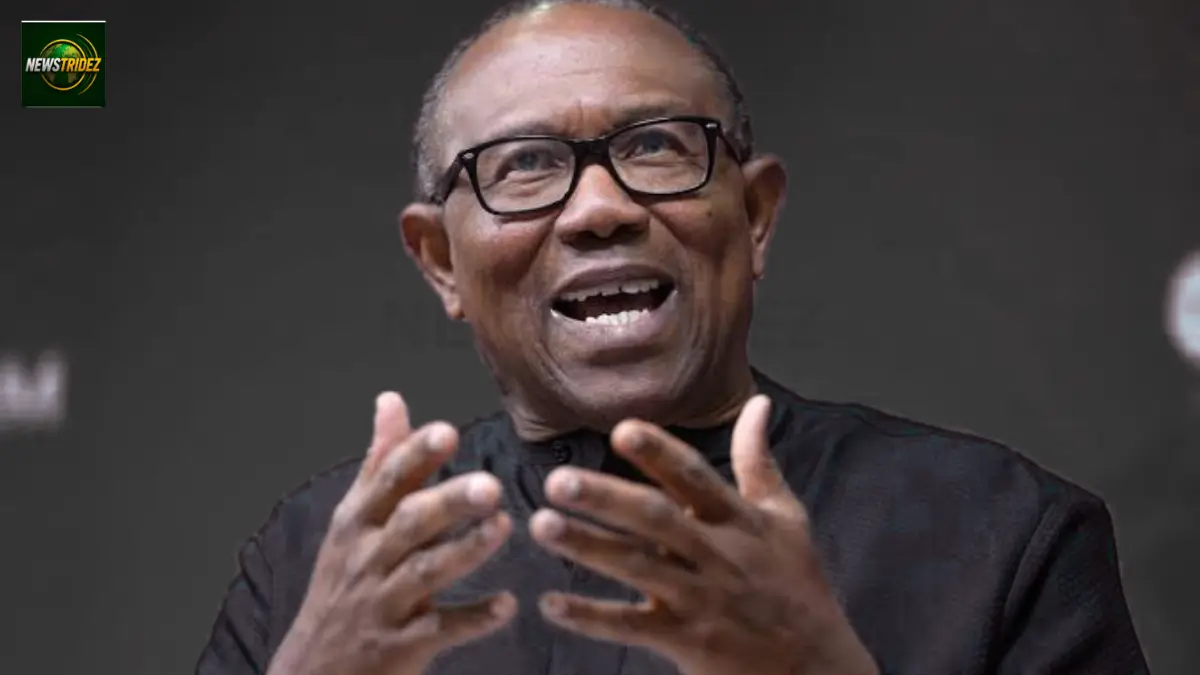
Peter Obi degree claims have been put to a fresh test after the University of Nigeria, Nsukka, confirmed that the former Anambra governor was admitted, graduated and received the certificate now under scrutiny.
NSUKKA, ENUGU — The University of Nigeria, Nsukka, has authenticated Peter Obi’s 1984 Bachelor of Arts degree in Philosophy, rejecting claims that the presidential candidate of the Nigeria Democratic Congress parades a fake university certificate.
According to the university’s response to a Freedom of Information request obtained by Premium Times, Obi was duly admitted to study Philosophy on September 3, 1980, with registration number 80/26333. The institution also confirmed that his Bachelor of Arts in Philosophy, Second Class Honours, Lower Division, dated December 15, 1984, came from UNN and carried certificate number D000198.
The controversy centres on Obi’s admission qualifications and the names appearing on his academic records. Critics have questioned how he gained admission to study Philosophy after a 1978 WAEC result showed passes rather than credits in English Language and Mathematics. Others have also pointed to differences between the name “Peter Obi” and the fuller name appearing on his academic documents.
Newstridez reviewed the fact-check findings and the university’s response, which provides the strongest institutional evidence currently available on the matter. UNN confirmed both Obi’s admission and degree, while also stating that the qualifications he presented met the university’s entrance requirements applicable at the time.
The allegation resurfaced after former Labour Party national vice-chairman, South-West, Abayomi Arabambi, appeared on television and social media platforms where he displayed copies of Obi’s academic documents. Arabambi argued that Obi’s publicly available WAEC result showed passes in English and Mathematics and questioned whether those grades could have secured admission to study Philosophy at UNN.
Arabambi’s argument relied partly on current admission information published by UNN. He said the university’s present requirements show that candidates seeking admission into Philosophy need five credits, including English Language and Mathematics. However, that comparison did not settle what admission rules applied when Obi entered the university in 1980.
Premium Times subsequently contacted Arabambi and obtained the academic documents he referenced. The WAEC certificate carried the name Gregory Peter Onwubuasi Obi and showed that he sat the Joint Examination for the School Certificate and General Certificate Examination at Christ the King College, Onitsha, in June 1978.
The result showed Grade 8, equivalent to a pass, in English Language and Mathematics. Obi also recorded passes in Government and Chemistry, while he obtained credits in Biology, Geography, Literature-in-English and Religious Knowledge, alongside a stronger grade in Economics. Those results formed the basis of the argument that his qualifications did not meet the requirements for admission.
The fact-checking process changed the picture after Premium Times wrote to UNN under the Freedom of Information Act, asking the institution to verify Obi’s admission, degree and qualification for entry into the Philosophy programme. The newspaper also asked whether any alternative admission route, exemption, remedial programme or equivalent qualification enabled Obi to enter the university.
UNN’s registrar’s office responded on August 26 through a letter signed by senior deputy registrar Eseme Obiora. The university confirmed that Obi was admitted by the university authority to study Philosophy in the Faculty of Social Sciences in 1980, with his admission documentation carrying JAMB references from that period.
On the certificate itself, the university gave a direct authentication. It stated that the Bachelor of Arts in Philosophy with Second Class Honours, Lower Division, dated December 15, 1984, “emanated from the University of Nigeria, Nsukka” and was awarded by the University Senate. The institution identified the certificate number as D000198.
Data reviewed by Newstridez shows that UNN did not merely confirm that Obi attended the university. Its response also confirmed that the O’Level qualifications he presented fulfilled the entrance requirements applicable at the time and that he required no alternative admission pathway, exemption or remedial programme before gaining admission.
The university explained that Obi qualified through a combination of two 1978 examination results. It said he used the June 1978 WAEC result together with another November/December 1978 GCE result to meet the admission requirements for Philosophy.
That detail addresses one of the central questions raised by critics. The June result alone showed passes in English and Mathematics, but UNN said the combination of the two examination results qualified Obi for admission. The institution therefore rejected the suggestion that Obi entered the university through an unexplained exemption or special route.
However, one part of the verification remains incomplete. Premium Times reported that UNN indicated that copies of both examination results and other supporting documents came as annexures to its response, but the newspaper did not receive those attachments. Repeated efforts to obtain the missing documents from the university registrar’s office had not succeeded as of publication.
That missing documentation means the public still cannot independently examine the November/December 1978 GCE result that UNN says formed part of Obi’s admission qualification. The university’s official confirmation, however, remains significant because the institution itself holds the admission records and has authenticated the degree certificate.
Obi has also responded to the renewed scrutiny. In a Facebook post on Tuesday, he asked UNN and other institutions he attended to release his academic records and certificates to people who make legitimate requests under the law. He said he had no objection to public examination of his educational history.
The former governor also called on other presidential candidates to make their educational qualifications available for legitimate scrutiny. He argued that candidates seeking the presidency should be prepared to demonstrate transparency and accountability about their backgrounds.
The issue comes as Obi prepares for another presidential contest in 2027. His educational history has remained a recurring subject in political debates, particularly because his supporters and opponents frequently use personal records to argue about his suitability for the presidency.
For voters, however, the distinction between an allegation and an established fact remains important. The current evidence does not support the claim that Obi’s UNN degree certificate is fake. The university that issued the certificate has authenticated it and confirmed his admission and graduation.
At the same time, the university’s failure to provide the referenced November/December 1978 examination attachment leaves one part of the verification unresolved. That gap does not overturn the university’s authentication of the degree, but it means the underlying admission evidence cannot yet be independently examined in full from the documents obtained by Premium Times.
The controversy also demonstrates why academic records matter in Nigerian politics. Questions over certificates can affect public trust, particularly when presidential candidates present themselves as advocates of transparency and accountability.
For Obi, the latest institutional confirmation gives him a strong basis to reject the fake-degree allegation. For his critics, the unresolved GCE document provides an argument for continued scrutiny. But any further claim that the degree itself is forged would need evidence capable of contradicting UNN’s official authentication.
As at the time of filing this report, Peter Obi degree certificate had been authenticated by the University of Nigeria, Nsukka, which confirmed that he was admitted in 1980 and awarded a Bachelor of Arts in Philosophy in 1984. The university also said his combined 1978 examination results met the admission requirements of the period.
The next step will likely depend on whether UNN releases the missing November/December 1978 GCE document and other supporting records. Until then, the available institutional evidence points to a genuine degree certificate, while the claim that Obi is parading a fake university degree remains unsupported by the university’s records.