
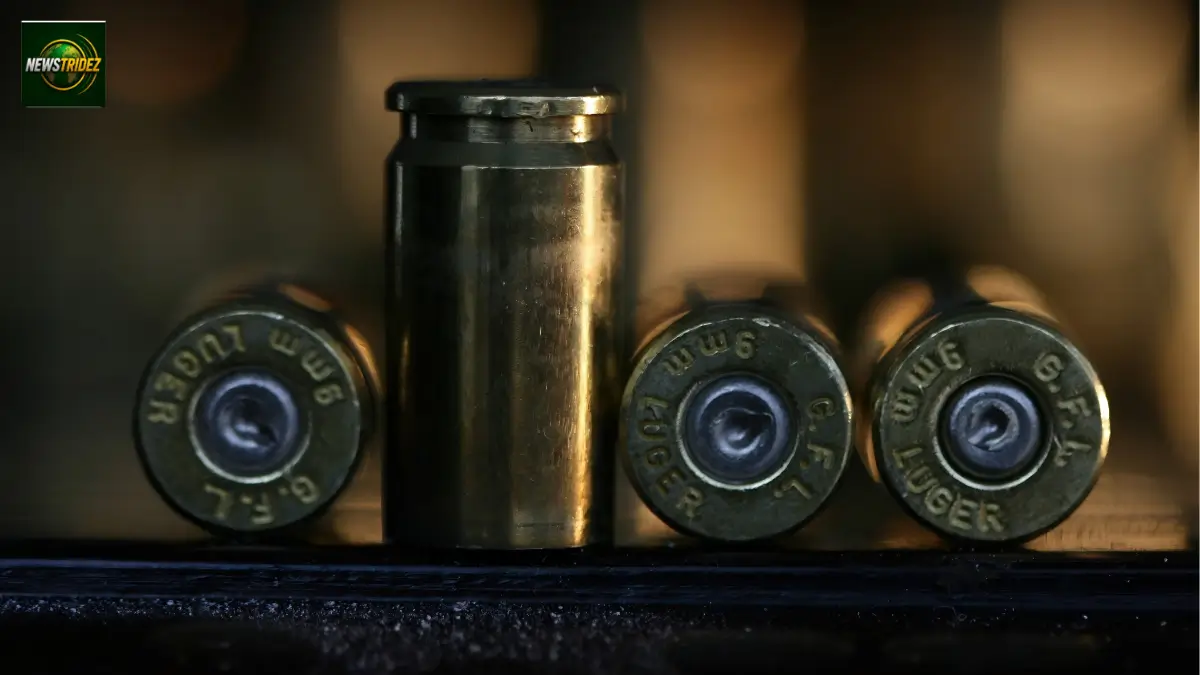
Arms imports into Nigeria have jumped 104% to N55.06bn in six months, raising fresh security concerns as the country moves closer to the 2027 general elections.
ABUJA, NIGERIA — Nigeria’s arms and ammunition imports rose by 104.31 per cent in the first half of 2026, reaching N55.06bn from N26.95bn recorded during the same period in 2025, according to foreign trade data from the National Bureau of Statistics.
According to the data, the country recorded the sharp increase within six months as security agencies continue to deal with illegal firearms, banditry, terrorism and other forms of violent crime. The latest figures have also raised concerns about the movement of weapons ahead of the 2027 general elections, which will take place less than a year from now.
The Independent National Electoral Commission(INEC) has scheduled the presidential and National Assembly elections for January 16, 2027, while Nigerians will vote for governors and state lawmakers on February 6, 2027. The timing has increased attention on the source, movement and control of firearms across the country, particularly in areas with a history of election-related violence.
Data reviewed by Newstridez indicates that the N55.06bn figure represents an increase of about N28.11bn compared with the N26.95bn recorded in the first half of 2025. The 104.31 per cent rise therefore comes at a time when security agencies are also reporting seizures of firearms entering the country.
Earlier, the Nigeria Customs Service intercepted about 603 firearms between January and August 2026, according to a report cited by The PUNCH. Authorities reportedly handed the seized weapons to the National Centre for the Control of Small Arms and Light Weapons, which handles efforts to control the spread of illicit firearms.
The combination of rising legal imports and seizures of suspected illicit weapons has renewed questions about Nigeria’s firearms-control system. The import figure alone does not show that the weapons entered the country illegally, nor does it establish that imported firearms will reach criminal groups. However, the increase adds pressure on regulators and security agencies to maintain proper tracking and controls.
The issue carries particular weight ahead of the 2027 elections because the availability of firearms can increase the risks faced by voters, electoral officials, journalists, observers and political campaign teams. Security experts and civil society organisations have repeatedly linked the circulation of weapons with election violence and intimidation in parts of the country.
A recent assessment by the CLEEN Foundation during the 2026 Osun State governorship election also showed the importance of sustained security deployment. The organisation monitored security arrangements at polling units and found that officers maintained their presence at most of the locations it observed, although gaps remained in some areas.
The CLEEN assessment found that security personnel left their posts for some period in six per cent of monitored locations, while two per cent had no security presence at all. The organisation also reported that officers carried firearms openly at 37 per cent of the polling units it monitored, which it described as broadly consistent with standard deployment practices.
The report recorded security threats in 12 per cent of monitored polling units and instances where security officials used force in two per cent. It also found that security personnel covered the transportation of ballot boxes in 86 per cent of the locations monitored, while observers could not independently confirm security coverage in the remaining 14 per cent.
For Nigeria, the concern goes beyond the value of firearms imported into the country. The bigger question involves how authorities account for weapons after importation, how they prevent diversion and how effectively they trace firearms used in crimes. Better tracking could help investigators connect recovered weapons to their source and strengthen prosecutions.
The timing also places additional responsibility on political parties and security agencies as campaigns gradually build towards the 2027 polls. Political actors will need to discourage the use of armed groups, while security agencies must maintain lawful and professional operations without creating fear among voters or interfering with legitimate political activity.
Meanwhile, the government’s firearms-control framework faces pressure from both domestic and cross-border trafficking networks. The reported Customs seizures show that authorities continue to intercept weapons at points of entry, but the scale of the latest import figures means monitoring must extend beyond border interception to licensing, distribution and end-user verification.
The CLEEN Foundation has also urged security agencies to maintain vigilance through the final stages of voting and the movement of election materials. It warned that risks can increase after polling closes, particularly during the period when officials clear queues, secure ballot boxes and move election materials to collation centres.
The organisation further called for faster action on legislation establishing a dedicated judicial process for electoral offences. It argued that weak enforcement can encourage a climate where offenders do not expect serious consequences, potentially undermining efforts to prevent violence during future elections.
For ordinary Nigerians, the rise in arms imports matters because the country continues to battle insecurity in several regions. More firearms in circulation can make violent crime harder to control if authorities fail to maintain strict oversight, while communities already affected by attacks remain vulnerable to further violence.
However, the N55.06bn figure should not be interpreted as proof that all imported arms are illegal or connected to criminal activity. The NBS trade data measures the value of imports, while Customs seizures and police investigations deal with specific weapons and suspected offences. Each case requires separate verification and, where necessary, prosecution.
As at the time of filing this report, Nigeria had recorded N55.06bn in arms and ammunition imports during the first half of 2026, up from N26.95bn a year earlier. The development comes as authorities prepare for the 2027 elections and continue efforts to restrict the circulation of illegal firearms.
The latest figures are expected to keep firearms control on the security agenda as the country moves towards the 2027 polls. Security agencies will face pressure to explain how imported weapons move through the country, strengthen monitoring where necessary and prevent firearms from reaching criminal networks or being used to disrupt Nigeria’s electoral process.