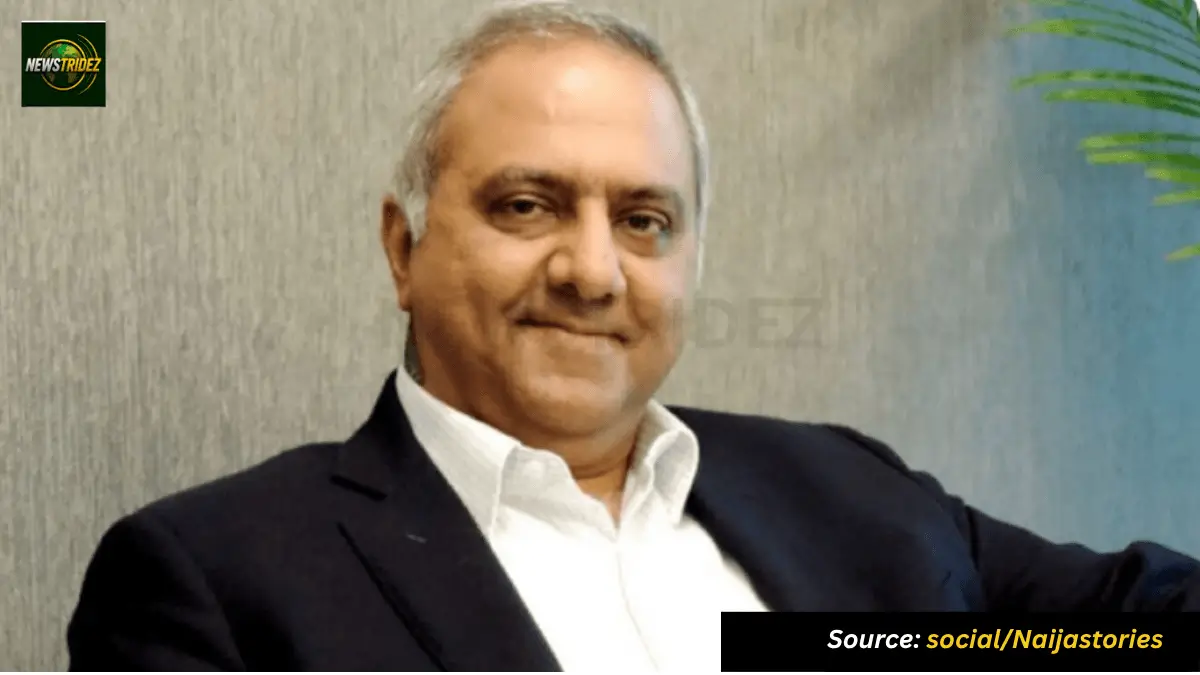

Umo Eno akara story has sparked fresh interest in small businesses after the Akwa Ibom governor revealed that his akara and bread venture once generated at least N10 million monthly before he entered politics.
UYO, AKWA IBOM — Governor Umo Eno has revealed that he once made not less than N10 million every month from an akara and bread business before venturing into politics, saying the venture later expanded into a coffee shop. He made the disclosure during Akwa Ibom State’s monthly covenant prayer service on Tuesday.
Eno said he started the business from a shop that he still owns, selling akara and bread to customers in the area. He developed a simple food combination that he called “Akara Burger”, putting akara inside sliced bread for customers who wanted a quick breakfast.
The governor said the business attracted people travelling to work at ExxonMobil, particularly during the morning rush. Customers bought the akara and bread combination and took coffee with it, prompting him to expand the venture beyond its original offering.
“We started coffee shop and then they will take it. Every month, that akara business used to give me nothing less than ₦10 million in a month,” Eno said during the service. His remarks were later captured in a video that circulated widely online.
Newstridez reviewed multiple reports of the governor’s remarks and found that Eno did not specify the year or period when the business generated the stated monthly amount. He also did not clarify whether the N10 million referred to net profit, gross revenue or the combined earnings of the akara, bread and coffee operations. The distinction is significant when assessing the scale of the claim.
Eno’s account has drawn renewed attention because of the ongoing debate about small businesses and whether low-capital ventures can provide meaningful income for Nigerians. His story offers a personal example of an entrepreneur who says he began with a basic food business before expanding the operation.
The governor did not present the akara business simply as a roadside trading activity. His account showed an attempt to create a recognisable product by combining akara and bread and then adding coffee to the offering. The approach allowed the business to target workers looking for affordable breakfast options before starting their workday.
The reference to ExxonMobil workers also provides an indication of the customer base the business served. Eno said people going to work at the oil company patronised the business in the mornings, suggesting that location and access to a steady stream of customers played a role in the venture’s growth.
His comments have gained particular attention because they come only months after First Lady Oluremi Tinubu encouraged Nigerians to consider small businesses such as akara and roasted corn as ways of improving their livelihoods. Her remarks generated significant debate, with critics questioning whether such ventures could adequately address the financial pressures facing Nigerians.
The First Lady later explained that the government’s empowerment programme was broader than akara selling. She said beneficiaries could include people involved in businesses such as tomato trading, roasted plantain, pepper and vegetable sales.
She also announced a N100 million intervention for 2,000 petty traders in Jigawa State, with each beneficiary receiving N50,000 to recapitalise their businesses. The programme was presented as a grant rather than a loan, according to reports.
President Bola Tinubu subsequently joined the public conversation by jokingly referring to his wife as “Iya Alakara” during a Presidential Press Corps Dinner. The comments kept the discussion about akara and small-scale businesses in the public spotlight.
Eno’s revelation now gives the debate another angle because the governor is speaking from his own claimed experience rather than simply encouraging others to start such businesses. He said the venture formed part of his entrepreneurial journey before his political career.
However, the N10 million figure has also prompted questions about the economics behind the claim. Social critic Emmanuel Udombon challenged the figure in a Facebook post, arguing that the governor should clarify whether the amount represented profit, turnover or earnings from several connected businesses.
Udombon also attempted to calculate the volume of akara that would have been required to generate N10 million in monthly profit. Using hypothetical profit margins of N100 and N50 per piece, he estimated that thousands of pieces would have to be sold each day. Those calculations, however, remain his own assumptions and do not establish that Eno’s claim was inaccurate.
The criticism highlights an important gap in the governor’s account: Eno did not provide financial records, sales volumes, operating costs or the period covered by the N10 million figure. Without those details, the public cannot independently determine whether the amount represented profit, turnover or combined business income.
That clarification matters because food businesses have expenses that include ingredients, cooking oil, labour, fuel or firewood, packaging, rent and other operating costs. Revenue and profit are therefore not interchangeable, particularly when discussing a monthly figure as high as N10 million.
Despite the questions surrounding the figure, Eno’s broader message focused on entrepreneurship and starting from a modest business. His account suggests that he sees his experience in the food business as part of the foundation for the commercial activities that preceded his entry into politics.
The governor was elected to lead Akwa Ibom State in 2023 after spending years in business and public service. His latest comments offer another glimpse into his background and the ventures he says he operated before becoming governor.
For Nigerians facing high living costs and limited formal employment opportunities, the discussion around small businesses remains relevant. Akara, bread and other inexpensive food products require relatively simple equipment compared with many formal businesses, although profitability depends heavily on location, customer volume, input costs and pricing.
Eno’s story has therefore shifted attention from the political debate surrounding akara to the practical question of how a small food business can grow. His own account points to product innovation, a strong customer base and expansion into complementary services such as coffee.
At the same time, the exact circumstances behind the N10 million monthly figure remain unclear. The governor has not publicly provided the business records or additional financial details needed to establish whether he meant profit, turnover or the combined earnings of the food and coffee operations.
The disclosure is likely to continue generating discussion as Nigerians weigh the possibilities and limitations of small-scale enterprise in the current economy. For now, the N10 million figure remains a claim made by Eno about his past business experience, while the details behind the amount have yet to be fully explained.
Governor Umo Eno’s account has revived the national conversation about akara and small businesses, but questions remain over the N10 million figure because he did not state whether it represented profit or revenue. Further clarification from the governor would provide a clearer picture of how the business reached that level of monthly earnings.