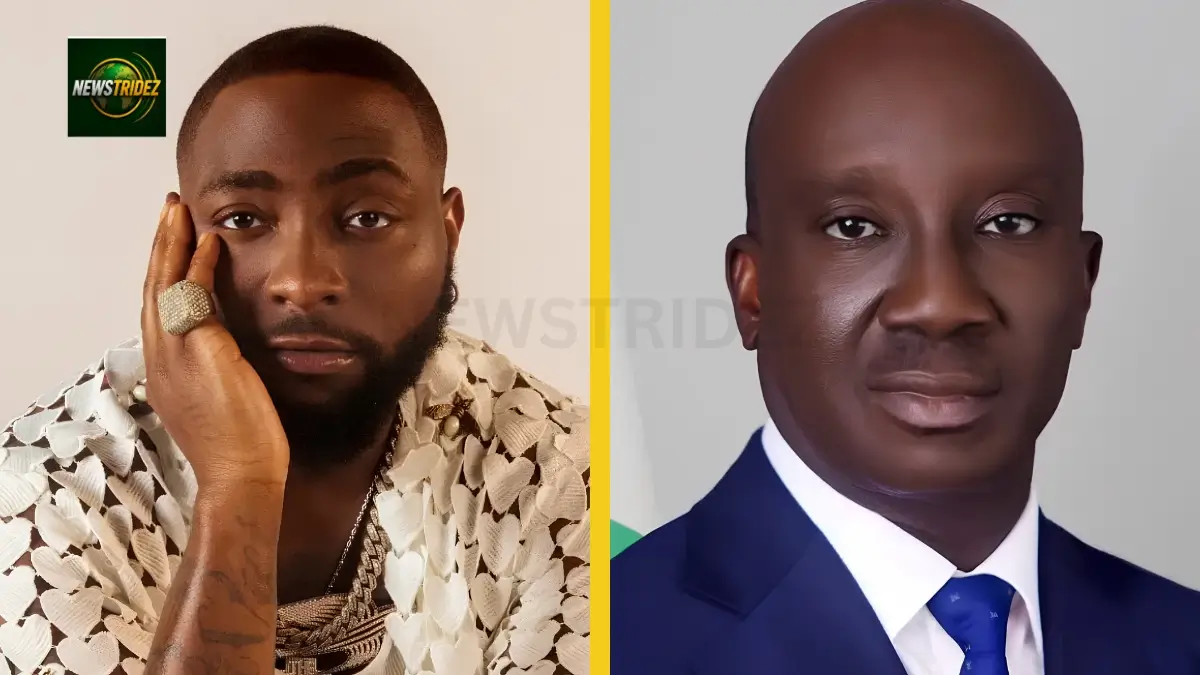
Davido Okpebholo clash has intensified after the singer refused to apologise for sharing an alleged WAEC result belonging to Edo Governor Monday Okpebholo. Davido defended the post during an interview in Osun.
OSOGBO, OSUN STATE — David Adeleke, popularly known as Davido, has refused to apologise to Edo State Governor Monday Okpebholo after sharing what appeared to be the governor’s West African Senior School Certificate Examination result online. Davido defended his action during an interview with News Central on Tuesday, August 18, 2026, after a political dispute involving his uncle, Osun Governor Ademola Adeleke.
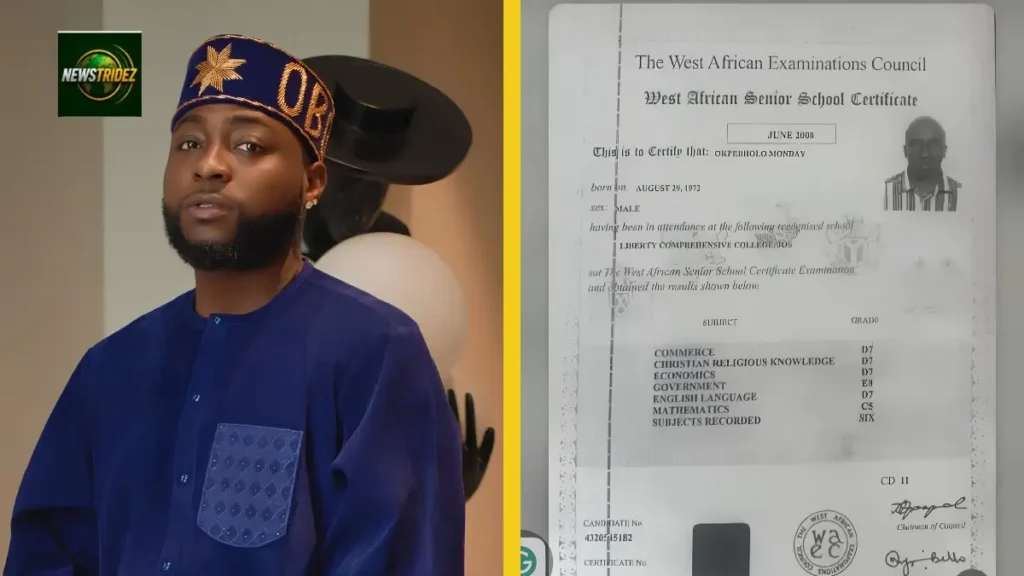
Davido said he believed he had done nothing wrong by sharing the alleged academic record, arguing that he wanted people in Edo State to see the academic result of the person governing them. The singer made the comments after a lawyer, Timothy Abiodun Tugbiyele, publicly urged him to apologise to Okpebholo over the social media post.
The dispute began after Okpebholo criticised Adeleke during political activities ahead of the August 15 Osun State governorship election. The Edo governor mocked Adeleke over his frequent dancing at public events while campaigning for the All Progressives Congress candidate, Bola Oyebamiji, popularly known as AMBO. Davido, who actively supported his uncle during the election campaign, responded by posting what appeared to be Okpebholo’s WASSCE result on his Instagram Story.
The singer later explained that his response came because Okpebholo had travelled from Edo to Osun to criticise Adeleke. Davido accused the governor of leaving his state to attack his uncle during the election campaign and questioned the state of infrastructure around the Edo Government House. He also warned that Adeleke would have an opportunity to respond politically when Okpebholo seeks re-election.
Davido also questioned Okpebholo’s electoral credentials during the interview, saying the governor had not been properly elected. The singer’s comments added another layer to an already heated exchange between supporters of the two governors, with the dispute moving from campaign speeches to social media and celebrity commentary. The controversy has since attracted reactions from politicians, lawyers and social media users across Nigeria.
However, the authenticity of the academic document Davido shared remains an important issue. A previous fact-check by the Centre for Democracy and Development raised questions about viral images purporting to show Okpebholo’s WASSCE results, saying forensic analysis suggested that one widely circulated image might have been digitally doctored. The report also identified inconsistencies in the timeline attached to the viral document.
Newstridez reviewed the available reports and found that current coverage describes the document as an alleged or apparently genuine WASSCE result rather than an independently authenticated WAEC record. Neither the current reports reviewed nor the material available from the dispute establishes that WAEC itself publicly confirmed the document shared by Davido. The distinction matters because an examination result attributed to a public official carries significant reputational implications if its authenticity has not been independently established.
The controversy also prompted Tugbiyele to call for an apology. He argued that although the result circulating online might not show an impressive academic performance, Davido should not have used it to ridicule the governor. He said the singer could have responded to Okpebholo’s criticism through political channels instead of publishing the alleged examination result on social media.
Tugbiyele’s intervention followed the wider political exchange surrounding the Osun election, where Adeleke faced the APC’s Oyebamiji. The election produced a decisive victory for Adeleke, who secured 511,067 votes against Oyebamiji’s 444,815, according to figures reported after the poll. The result has since become another point of discussion among politicians as parties begin looking beyond the state election towards Nigeria’s next major electoral contest.
Davido has remained publicly involved in his uncle’s political campaigns and used his large social media following to support Adeleke during the Osun election. His intervention in the dispute with Okpebholo therefore carries more political weight than a normal celebrity exchange, particularly because the singer is a close relative of the Osun governor and openly campaigned for him during the election period.
The episode also highlights how Nigeria’s political arguments increasingly spill into entertainment and social media spaces. Celebrities with millions of followers can quickly amplify political disputes, while politicians can find themselves responding to personalities who hold no formal government position but command significant public attention. In this case, an argument that began with comments about Adeleke’s dancing has expanded into a dispute over academic records, governance and political credibility.
For Okpebholo, the controversy comes after he travelled to Osun to campaign for the APC candidate and criticised Adeleke’s leadership style. For Davido, the matter has become personal because of his relationship with the Osun governor. The singer has made clear that he does not intend to apologise, while the authenticity of the academic document remains a separate question that requires verification from the appropriate examination authority.
The Davido Okpebholo dispute is unlikely to disappear immediately, especially as Nigerian politicians and their supporters continue positioning themselves for future elections. For now, Davido has rejected calls for an apology, while Okpebholo’s side has faced renewed attention over the alleged WAEC document. The next major development will likely depend on whether the governor responds directly or whether WAEC provides any clarification about the result circulating online.