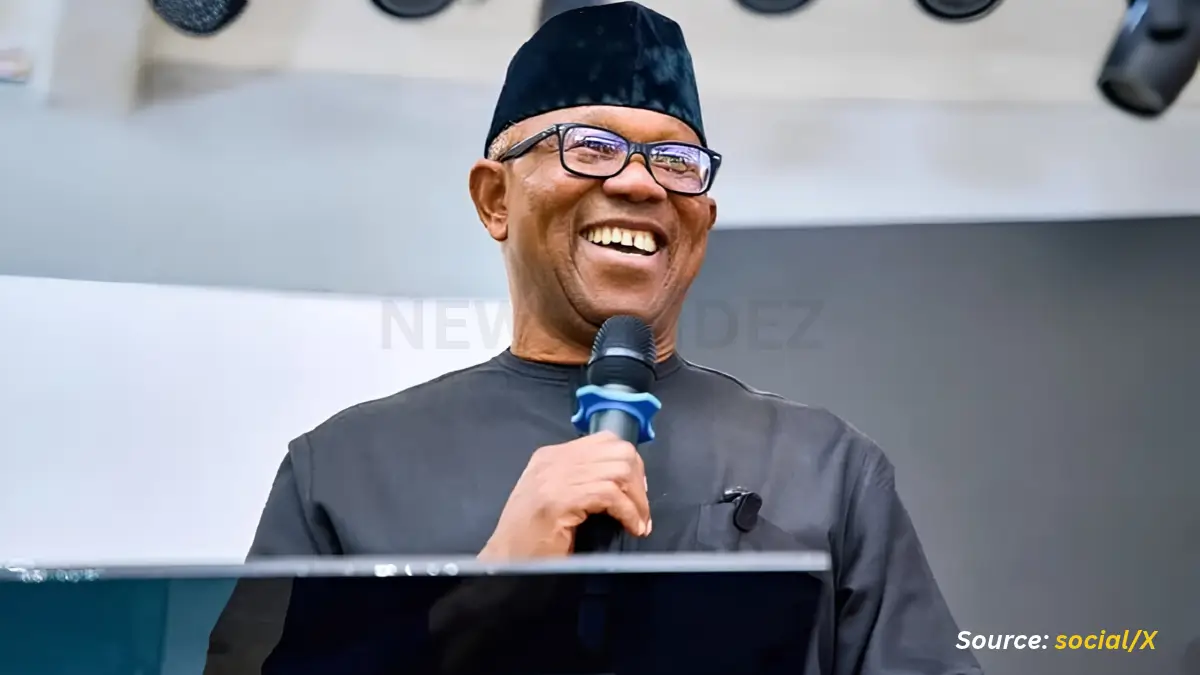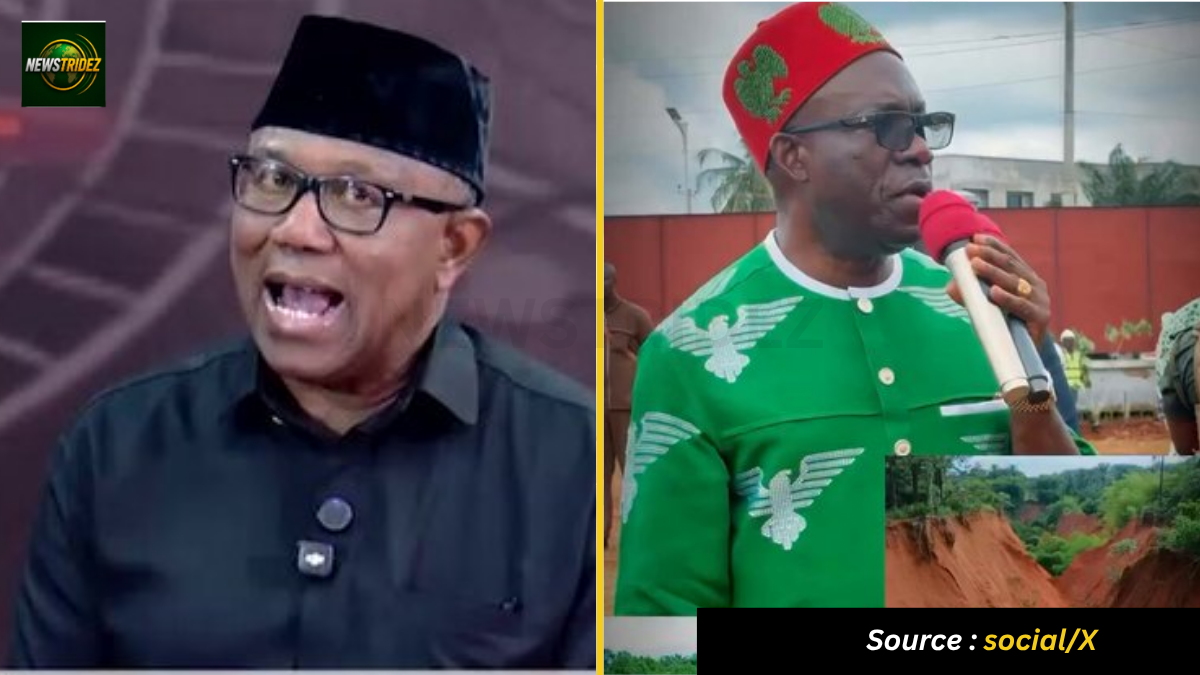
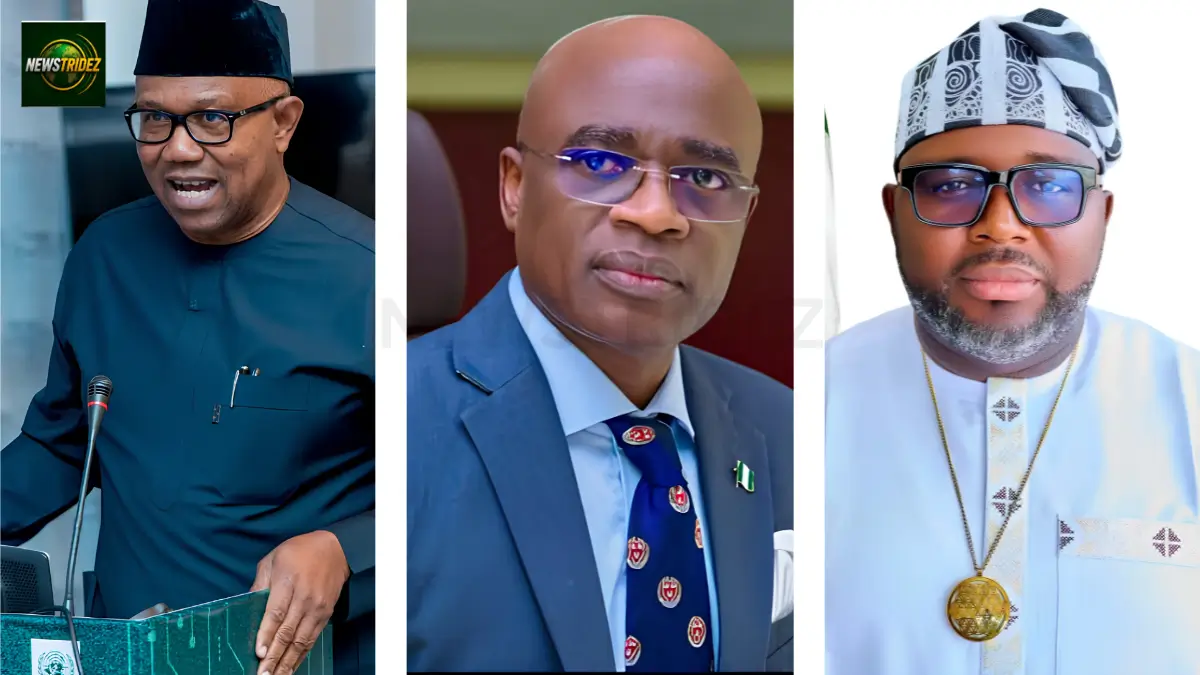
Peter Obi Benue tensions have risen after a state commissioner accused the opposition politician of ignoring official visit protocol before youths blocked his convoy in Makurdi.
MAKURDI, BENUE STATE — Benue State Commissioner for Information, Solomon Iorpev, has accused former Anambra State governor Peter Obi of repeatedly ignoring official protocol by failing to notify the state government before visiting, saying the move created avoidable security concerns.
Iorpev made the allegation while reacting to the reported blockage of Obi’s convoy by youths during his visit to Benue on Tuesday. The commissioner said the government expected a high-profile visitor and former governor to formally notify the state so authorities could make adequate security arrangements.
Newstridez reviewed the commissioner’s comments and related reports on the incident. Iorpev said the state government could not guarantee Obi’s security because, according to him, the former governor did not submit a formal letter notifying the authorities about his visit.
“A high-profile person who has been a former governor of a state is coming into the state; he should have written a letter to the State Government,” Iorpev said.
The commissioner argued that notifying the government was necessary because Benue authorities had a responsibility to provide security and protection for a prominent visitor. He said the absence of such notification made it difficult for the state to prepare for Obi’s movement.
Iorpev also alleged that this was not the first time Obi had visited Benue without following the procedure he expected from a former governor and high-profile political figure.
“He is just looking for our trouble. We are peace loving and hospitable people,” the commissioner said.
His comments came after Obi’s convoy was reportedly blocked by youths while he was visiting the state. The former governor had travelled to Benue as part of a visit connected to communities affected by deadly attacks and was expected to meet victims and their families.
Obi has separately described the incident as an obstruction of his visit, while reports indicated that his convoy encountered youths on the road. The circumstances surrounding the confrontation remain subject to investigation and competing accounts.
The commissioner, however, denied knowing the identities or motives of the youths who blocked Obi’s convoy. Rather than directly accusing them of acting on behalf of the state government, Iorpev said Obi’s visit coincided with a gathering of youths from Benue’s 23 local government areas.
According to the commissioner, the timing of the two events may have contributed to the incident. He listed Tarka, Gboko, Buruku, Ushongo, Konshisha and Vandeikya among areas from which youths could have been travelling at the time.
“So, if they were coming from either Tarka, Gboko, Buruku, Ushongo, Konshisha or Vandeikya at the same time of his visit and blocked the road, it is unfortunate. I do not know the youths who did that,” Iorpev said.
The commissioner’s comments are significant because the incident has already triggered political reactions ahead of the 2027 general elections. Obi, a leading opposition figure and presidential candidate of the Nigeria Democratic Congress, has continued to build political support and engage communities across the country.
The Benue incident has also raised questions about how political visits by opposition figures should be handled in states controlled by rival political parties. Security arrangements can become particularly sensitive when prominent politicians visit areas affected by violence or where political tensions are already high.
Earlier reports showed that a Benue government aide also said the state was unaware of Obi’s visit, while the police confirmed that the convoy had been blocked and said an investigation was underway.
The different accounts have left several questions unanswered, including who organised the youths at the location, why the convoy was stopped and whether the incident was spontaneous or planned.
For the Benue government, the controversy centres on security and communication. For Obi and his supporters, the incident raises concerns about whether opposition politicians can freely visit communities and meet residents without facing obstruction.
The commissioner maintained that Benue remains peaceful and hospitable and denied any knowledge of those behind the confrontation. His comments also suggest that the state government wants political visitors to comply with established notification procedures before undertaking public engagements.
Meanwhile, the police investigation is expected to provide more clarity on what happened when the youths stopped Obi’s convoy. Until investigators establish the identities and motives of those involved, claims about who organised the blockade remain unproven.
The incident could further fuel political tensions in Benue as parties and aspirants intensify activities ahead of 2027. Obi’s visit, the government’s response and the police investigation are likely to remain part of the political debate over security, opposition activity and access to communities in the state.