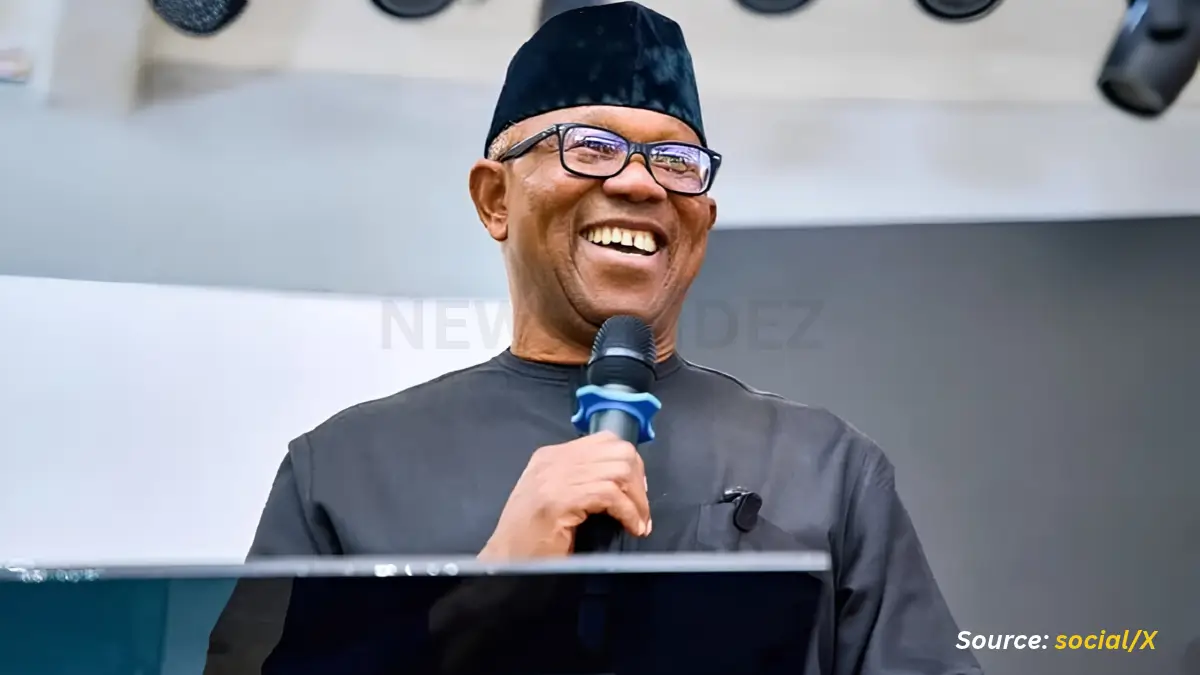

The 2027 race is taking a new turn as Peter Obi points to growing acceptance in Northern Nigeria. The former Anambra governor says Peter Obi 2027 is no longer a Southern conversation.
ABUJA, NIGERIA — Peter Obi says his 2027 presidential ambition has gained an important advantage because voters across Northern Nigeria increasingly see him as a candidate capable of winning support beyond his South-East base, a claim that comes as opposition parties prepare for a major contest against President Bola Tinubu.
Obi’s argument comes at a time when Nigeria’s opposition politics remains fluid, with several prominent figures positioning themselves for the 2027 presidential election. Obi has repeatedly faced criticism from opponents who describe him as a regional candidate because of his strong performance in the South-East during the 2023 election. However, supporters point to his efforts to build support in other parts of the country, including Northern states, as evidence of a wider political reach.
The former Anambra governor has also argued that Nigeria’s presidency should not depend on ethnic or regional calculations but on competence, capacity and the ability to address the country’s problems. A similar position came from Labour Party chieftain Chris Nwaokobia during the 2023 campaign, when he described Obi as a candidate promoting a pan-Nigerian political message rather than one based on ethnicity.
Obi’s latest position carries political weight because Northern Nigeria remains central to any serious presidential strategy. The region contains some of the country’s largest voting populations, while political parties have traditionally relied heavily on Northern support to build winning presidential coalitions. That makes any attempt by Obi to expand his appeal in the region a major test of whether his 2023 support can become a broader national coalition.
The 2023 election offers an important reference point. Obi won overwhelmingly in his home state of Anambra, where official results recorded 584,621 votes for him, representing 95.24 per cent of the votes cast in the presidential election there. His strongest regional performance helped establish the Labour Party candidate as a major political force, but his opponents later used the geographical concentration of his support to question his ability to build a nationwide electoral structure.
Since then, Obi’s political position has changed significantly. He left the Labour Party and joined the African Democratic Congress as opposition figures sought a common platform ahead of the 2027 election. The move placed him within the same wider opposition arrangement involving prominent politicians such as former Vice President Atiku Abubakar and former Kano State governor Rabiu Kwankwaso.
The political calculation around Obi’s Northern appeal has also become more complicated. While some Northern politicians and groups have openly backed him, others have rejected his candidacy. In June 2026, for instance, an NDC chieftain in Zamfara State publicly described Obi as the candidate he preferred and argued that Obi could provide a new direction for Nigeria.
At the same time, not every Northern voice supports Obi. An Arewa youth leader previously said the North should not expect to vote for him in 2027, showing the sharp political divide that still surrounds his ambition. The competing positions suggest that Obi’s claim of growing Northern acceptance remains a political argument that will face a tougher test during campaigns and eventually at the ballot box.
Newstridez could not independently verify the full setting or original recording of the latest statement attributed to Obi from the material available online. That distinction matters because political statements often circulate on social media without the full interview or speech that provides the surrounding context. The claim should therefore be read alongside Obi’s wider public comments and the documented movement of opposition politics ahead of 2027.
Obi has previously called for opposition leaders to unite behind a single candidate if they want to defeat President Bola Tinubu in 2027. The issue has become one of the biggest questions within the opposition coalition, especially as supporters of different politicians continue to push for their preferred candidates. The Guardian reported that Obi-Datti Movement spokesman Yunusa Tanko maintained that Obi remains the group’s preferred presidential candidate.
The debate is also taking place against a changing political environment. Obi’s supporters want his 2023 momentum to continue, while other opposition camps argue that electoral victory requires stronger structures across the North and South. For Obi, building genuine support outside the South-East could therefore become one of the clearest tests of his 2027 strategy.
For Nigerian voters, the bigger issue is whether political support can move beyond regional loyalty and translate into a nationwide electoral coalition. The 2027 election will likely place greater pressure on all major candidates to demonstrate support across several geopolitical zones, particularly in states where no candidate can rely solely on ethnic or traditional political loyalties.
The Peter Obi 2027 campaign will now face the harder task of turning claims of Northern acceptance into measurable political support. As the opposition coalition takes shape and the parties move closer to their nomination processes, Obi’s ability to attract voters across Northern Nigeria could determine whether he remains primarily a regional political force or emerges as a truly national contender.