
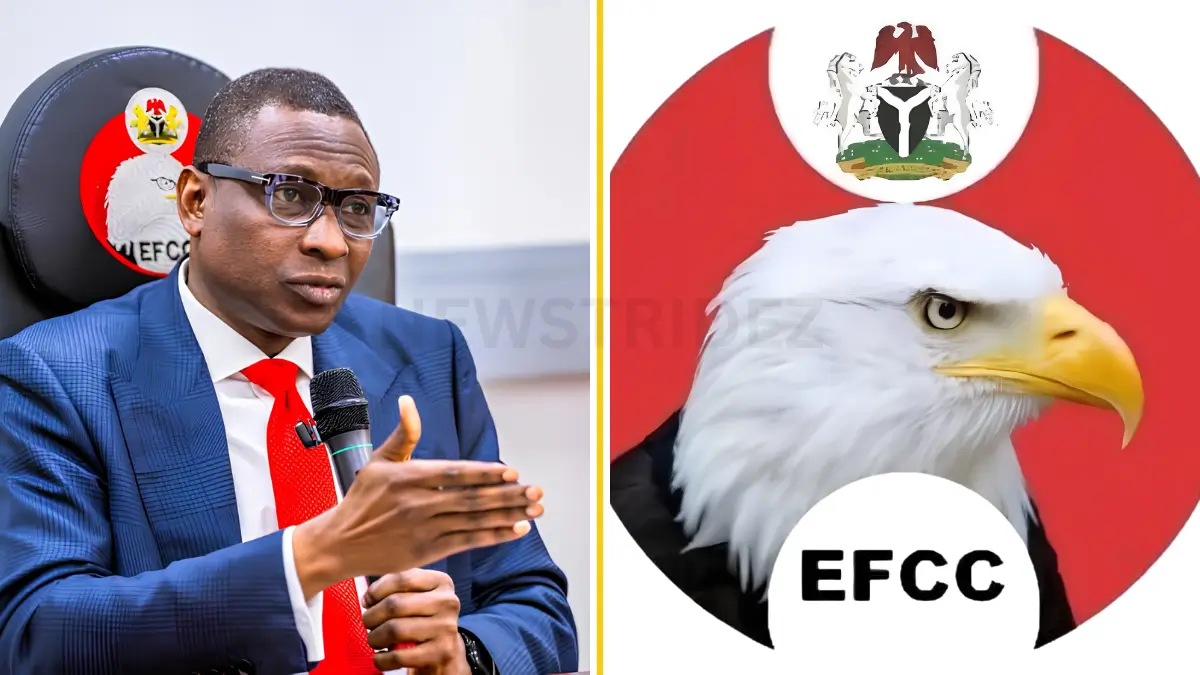
The EFCC crypto wallets investigation has uncovered suspicious movement of public funds from a Nigerian local government account into a private company and later into cryptocurrency wallets.
ABUJA, NIGERIA — Ola Olukoyede, Chairman of the Economic and Financial Crimes Commission, says investigators detected public funds moving from a local government account to a private company before the money entered cryptocurrency wallets. He disclosed the case in Abuja on Monday, August 31, 2026, while explaining the commission’s new strategy of stopping suspicious transactions before funds disappear.
Olukoyede said the commission’s Fraud Risk Assessment and Control Department detected the suspicious transactions and immediately intervened. According to him, the EFCC restricted the account for 72 hours to establish where the money was going and why the transaction had taken place. He defended the intervention, saying the commission could not simply watch public money move through unusual channels without asking questions.
The EFCC chairman did not identify the local government, state or private company involved in the transaction. He also did not disclose the amount of money allegedly moved. That means the available information does not establish the identity of any particular local government or prove that officials of a named council committed a crime. The commission’s disclosure, at this stage, concerns a suspicious transaction under investigation.
Olukoyede explained that investigators first noticed money leaving the local government account and moving into a company account. Further checks, he said, showed that the funds subsequently moved into cryptocurrency wallets. The discovery prompted the commission to act before the money could move further through digital channels, which can make recovery and identification more difficult when investigators do not intervene quickly.
“When we see money moving suspiciously, we move in and freeze it in the interim.”
The chairman said the case illustrates why financial crime agencies should not wait until public funds have completely disappeared before taking action. He said the EFCC is changing its approach by identifying suspicious movements early, temporarily restricting transactions and examining their source, destination and purpose before deciding what further action the law permits.
The development comes as cryptocurrency becomes a bigger part of Nigeria’s financial system and also a growing area of concern for law enforcement agencies. Olukoyede said some public officials allegedly now use young people as fronts to move funds through cryptocurrency wallets. He said the commission has developed stronger capacity to trace wallets connected to virtual asset platforms operating legally in Nigeria.
According to the EFCC chairman, about 40 virtual asset platforms have received licences to operate in Nigeria, giving investigators more avenues for tracing transactions involving registered platforms. He also disclosed that the commission, with presidential approval, had established a national confiscation wallet where seized cryptocurrency assets can be held while legal proceedings continue.
The move towards digital asset investigations reflects the changing nature of financial crime. Traditional investigations often focus on bank accounts, property, vehicles and other physical assets. Cryptocurrency can move across wallets quickly, however, and investigators may have to combine banking records, blockchain information, telecommunications data and other evidence to establish who controlled an asset and where funds originated.
For local governments, the revelation raises fresh questions about financial controls at the grassroots level. Local government funds are public resources meant to support services and development in communities, including roads, sanitation, primary healthcare and other responsibilities. Suspicious transfers from council accounts can therefore attract serious public concern, particularly where the purpose of the payment cannot be clearly established.
The disclosure also comes after the EFCC attracted criticism over its decision to freeze an account belonging to the Osun State Government shortly before the state’s August 15 governorship election. However, Olukoyede did not link the cryptocurrency transaction he discussed to Osun State or any other named state. That distinction matters because the latest disclosure should not be presented as evidence that Osun officials moved public money into crypto wallets.
Newstridez reviewed the EFCC chairman’s latest comments alongside other reports on the development. The confirmed facts are that the commission detected a suspicious transfer from an unidentified local government account to a company and then into cryptocurrency wallets, and that investigators temporarily froze the funds for 72 hours. The available reports do not identify the council, company, amount involved or any person who may face prosecution.
Olukoyede said the commission’s preventive strategy aims to stop suspected illicit funds before criminals can dissipate them. He argued that waiting for a complete theft before investigating often gives suspects enough time to move assets, close accounts or transfer money beyond easy reach. The 72-hour intervention, he said, gives investigators a window to examine suspicious activity and determine whether further enforcement action is necessary.
The EFCC is also using civil asset-forfeiture procedures in some cases instead of waiting for lengthy criminal trials before seeking to recover suspected proceeds of crime. Olukoyede said the commission can pursue the asset itself under relevant laws, requiring anyone claiming ownership to explain its source. The approach, he said, can prevent assets from being dissipated while criminal investigations continue.
The chairman’s comments suggest that cryptocurrency will remain an important area of EFCC investigations as Nigeria’s financial system becomes increasingly digital. The agency’s ability to trace registered virtual-asset transactions could make it harder for suspects to assume that moving public funds into digital wallets automatically places the money beyond the reach of investigators.
For Nigerians, the central issue remains accountability. The EFCC has not yet disclosed the local government involved, so the public cannot independently assess the transaction or determine whether officials authorised it for a legitimate purpose. Until investigators release further details or take legal action, the transaction remains a suspicious movement rather than proof that a particular official stole public funds.
The EFCC crypto wallets investigation therefore highlights a new front in Nigeria’s fight against financial crime. The commission says it intercepted suspicious public funds after they moved from an unidentified local government account through a company and into cryptocurrency wallets. Further investigation is expected to establish the source, purpose, beneficiaries and legality of the transactions.
As at the time of filing this report, the EFCC had not named the local government, state, company or individuals connected to the transaction. The commission has, however, made clear that it intends to intervene earlier when it detects suspicious movements of public money. Any arrests, prosecutions or recovery measures will depend on what the ongoing investigation establishes.