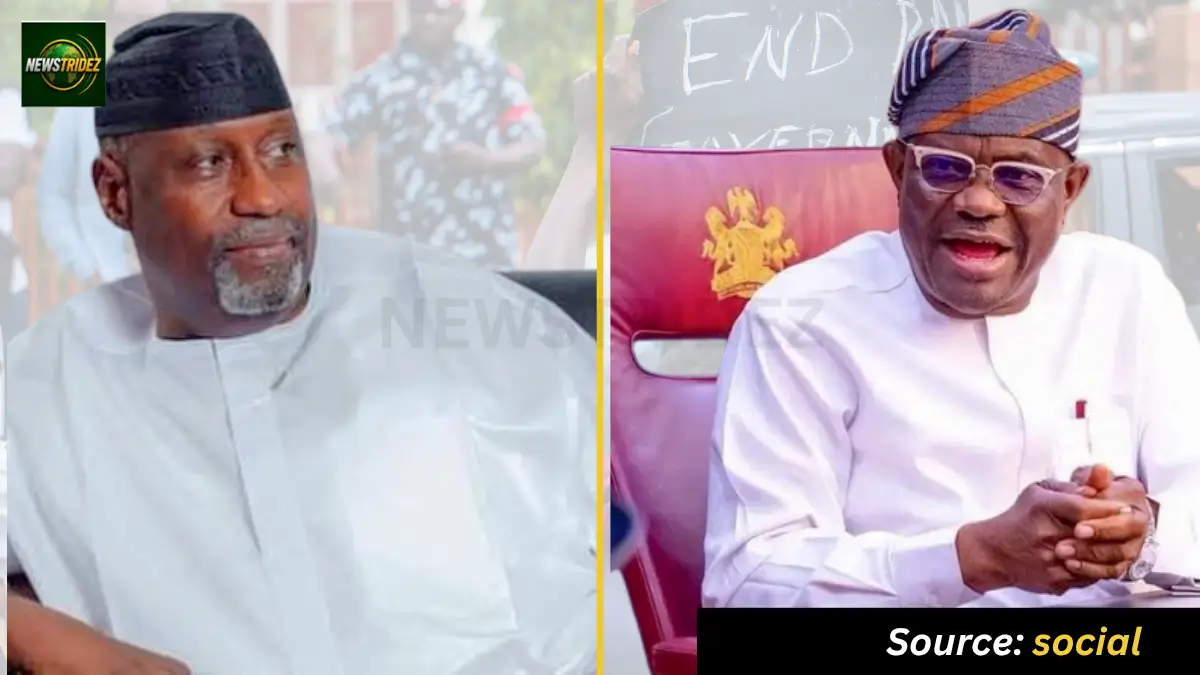
Farouk Aliyu Wike clash has deepened after the APC chieftain rejected Nyesom Wike’s description of some party governors as lazy and 419ners over the 2027 Rainbow Coalition dispute.
ABUJA, NIGERIA — APC chieftain Farouk Aliyu has rejected comments by FCT Minister Nyesom Wike describing some All Progressives Congress governors as “politically lazy” and “419ners”, saying the remarks have angered members of the ruling party.
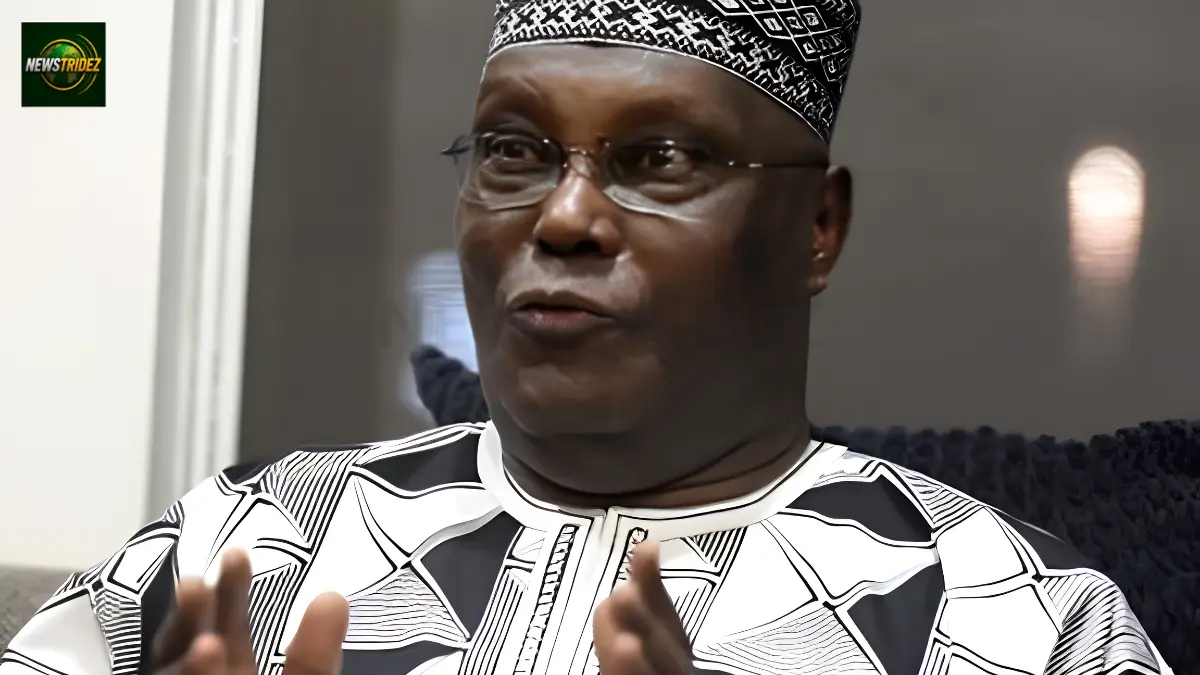
According to Aliyu, who spoke on Arise Television’s Morning Show on Thursday, September 17, the APC cannot stop Wike from expressing his political views but will not accept public attacks against governors elected on the party’s platform. He urged the minister to moderate his language as tensions rise ahead of the 2027 elections.
Data reviewed by Newstridez shows that the disagreement followed an open clash between Wike and the APC Progressive Governors’ Forum over the minister’s proposed Rainbow Coalition, which he says seeks to mobilise support across party lines for President Bola Tinubu’s 2027 re-election bid. The governors have opposed political arrangements they believe could weaken APC candidates.
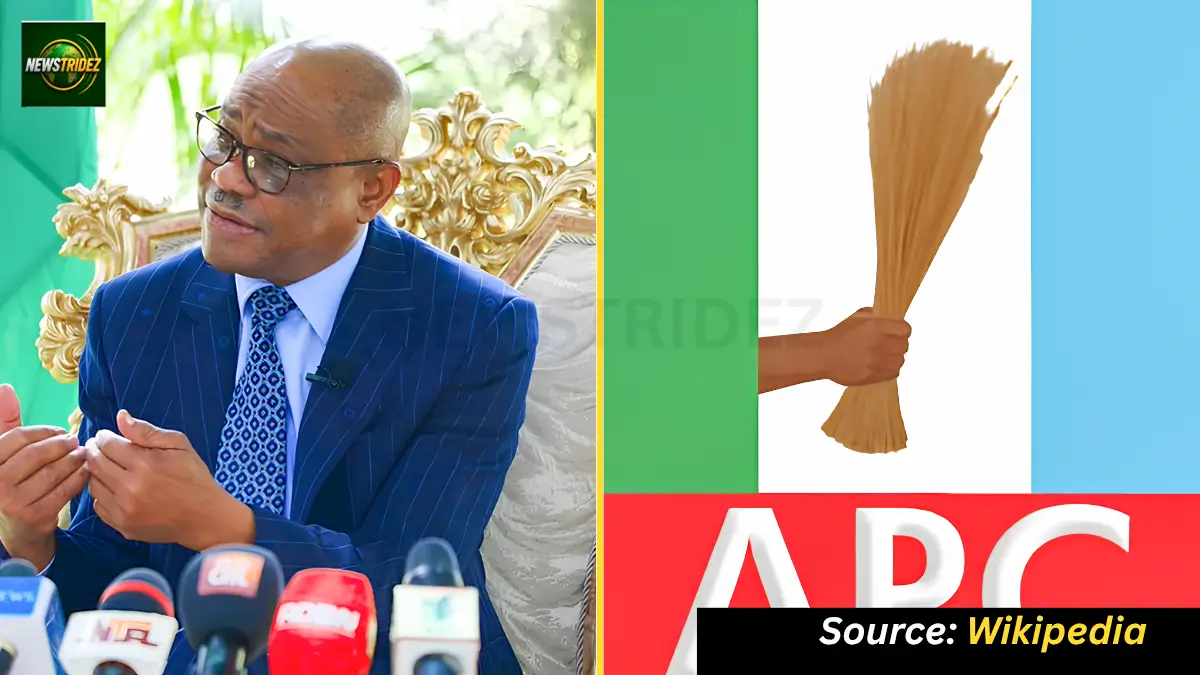
Wike triggered the latest exchange during an Arise Television interview on September 15, when he described APC governors who opposed his political arrangement as “politically lazy”. He questioned their concerns about the coalition and said his discussions with President Tinubu did not require approval from the governors or the APC leadership.
Farouk said the APC viewed the language as unacceptable, particularly because Wike currently serves in the APC-led Federal Government while remaining a member of the opposition Peoples Democratic Party. He said the party could welcome Wike’s support for Tinubu without accepting what he described as insults directed at its governors.
“The language he used to call our governors ‘419ners’ or lazy, that’s really in bad taste, and we, all members of APC, reject that statement,” Aliyu said.
He also called on Wike to exercise humility and avoid turning the political disagreement into a wider confrontation. Aliyu said political office holders should remember that positions of authority are temporary and that public officials should be careful about how they address other political leaders.
“We will not allow Wike to use our party (APC) and build his party (PDP). Just because you want to support the president, you insult people anyhow, including our leaders”
— YabaLeftOnline (@yabaleftonline) September 17, 2026
— Farouk Aliyu, APC chieftain pic.twitter.com/fTYjeMpQet
The APC chieftain said the party was particularly concerned because its governors are central to the party’s political structure at the state level. He explained that the APC was working towards a unified campaign structure for the 2027 election, with governors expected to coordinate the party’s activities in their respective states.
Aliyu also challenged the idea that Wike’s support for Tinubu automatically gives him authority to determine how APC structures operate. He said the party was not aware of any private political arrangement Wike may have reached with the President and that the minister’s discussions with Tinubu should not be confused with decisions taken by the APC.
“If he said he had meetings or an arrangement with Mr President, well, we in the APC are not privy to that. I’m sure he’s not privy to what we are also discussing with Mr President,” Aliyu said.
The disagreement became public after the Progressive Governors’ Forum, led by Imo State Governor Hope Uzodimma, rejected political alliances that could undermine the APC or affect the party’s candidates in the 2027 elections. Uzodimma said the governors would remain committed to supporting APC candidates at different levels.
Wike responded by questioning the governors’ political position and accusing them of using Tinubu as an excuse for their opposition to his coalition. He said the governors were “smart” but politically lazy, while insisting that the President knew about his political activities and that he did not need approval from the APC governors to support Tinubu.
The FCT minister has also argued that supporting Tinubu for president does not require him to abandon the PDP or stop supporting candidates from other parties in governorship and legislative contests. That position has created a difficult political situation because Wike remains a PDP member while serving as a minister in an APC-led federal government.
For the APC, the dispute goes beyond Wike’s choice of words. The disagreement touches on who controls campaign structures at the state level and whether politicians from different parties can coordinate presidential support while competing against one another in governorship and legislative elections.
Newstridez found that the disagreement has already produced separate responses from APC figures. While Farouk urged party members not to engage Wike in prolonged public exchanges, other party voices have called for the minister to explain his Rainbow Coalition directly to APC governors.
APC chieftain Joe Igbokwe, for instance, urged Wike to meet with the governors and explain the purpose of the coalition. Igbokwe described Wike as a significant political stakeholder but said the disagreements should be addressed through discussions rather than continued public exchanges.
The dispute has also spread beyond individual APC figures. A joint position from South-East APC leaders criticised Wike’s recent attacks on members of the Progressive Governors’ Forum and backed the governors’ position that APC candidates should receive the party’s support in the 2027 elections.
For voters, the disagreement could shape how political alliances are presented during the 2027 campaign. Wike is promoting a cross-party arrangement around Tinubu, while the APC governors are defending the party’s own campaign structure and candidates. Both positions involve different approaches to presidential and state-level electoral politics.
The issue is especially significant in states where presidential support and governorship contests could involve different political alignments. Wike has argued that voters can support Tinubu for president while choosing candidates from other parties for governorship and legislative positions. The APC governors, however, have stressed party unity and support for APC candidates across the ballot.
Aliyu has also tried to lower the temperature, telling APC members not to allow the disagreement to distract the party from governance and preparations for the next election. He said the party should focus on its own responsibilities rather than engage in a prolonged verbal confrontation with Wike.
He further argued that Wike’s support for Tinubu remains welcome, but said the minister should not use that support as a reason to publicly attack members of the ruling party. Aliyu said the APC recognised Wike’s contribution to Tinubu’s political support but expected him to communicate with party leaders respectfully.
Wike, meanwhile, has maintained that his political activities are known to President Tinubu. He said the President is aware of the Rainbow Coalition and that he has informed him about his plans. Wike has also insisted that he is not answerable to APC governors because he is not a member of the party.
The minister has continued to defend his political strategy despite criticism from APC figures. His position is that support for Tinubu can come from politicians across party lines and does not necessarily require those politicians to abandon their parties or stop contesting against APC candidates in other elections.
The APC governors’ position remains different. Their forum has said it will not support an arrangement that weakens the APC or damages the electoral prospects of the party’s candidates. That disagreement has created an unusual situation in which a federal minister supporting the President is publicly at odds with governors from the President’s party.
The political argument is now unfolding as parties and political actors begin positioning themselves for the 2027 elections. While the APC seeks to maintain a coordinated structure, Wike’s Rainbow Coalition is attempting to bring together politicians and supporters from different parties around Tinubu’s presidential campaign.
As at the time of filing this report, Farouk Aliyu Wike tensions remained part of the wider disagreement between Wike and APC governors over the Rainbow Coalition. Aliyu had rejected Wike’s description of the governors as lazy and 419ners, while Wike continued to defend his political activities and his support for Tinubu.
The next stage will depend largely on whether President Tinubu intervenes directly and how APC leaders manage the dispute before campaign activities intensify. Aliyu has called for restraint, while other party figures continue to demand clarity over Wike’s coalition. For now, the disagreement remains an internal political contest over party structure, alliances and the shape of the 2027 campaign.