A fresh NDLEA meth lab operation has exposed a suspected Mexican-linked drug network in Ebonyi State, while a Mexican kingpin faces arrest after investigators traced his activities from Oyo to the southeast.
ABUJA, NIGERIA — The National Drug Law Enforcement Agency has dismantled another industrial-scale methamphetamine laboratory in Ebonyi State and arrested Mexican national Arturo Carrera Loaiza, whom the agency identified as a suspected drug kingpin linked to a wider network operating in Nigeria.
According to the NDLEA, operatives arrested Loaiza on August 19, 2026, while he attempted to leave Nigeria through the Lagos airport. The agency said the arrest followed months of investigation into clandestine methamphetamine laboratories uncovered in Ogun and Oyo states, with evidence later leading investigators to a property in Ebonyi.
The operation has raised fresh concern over the activities of international drug networks seeking to establish synthetic-drug production facilities in Nigeria’s forests and rural communities. The NDLEA said the latest discovery came after investigators connected Loaiza to a Mexican methamphetamine expert previously arrested at a forest laboratory in Oyo State.
Newstridez reviewed the NDLEA’s official account and multiple reports on the operation, and found that the Ebonyi discovery forms part of a wider sequence of investigations rather than an isolated raid. The agency has linked the latest operation to earlier arrests involving Mexican nationals and Nigerian collaborators in Ogun and Oyo states.
The NDLEA said the investigation began after operatives arrested 56-year-old Mexican methamphetamine expert Jose Villa Ochoa and four Nigerian collaborators at a clandestine laboratory in Tapa village, Ibarapa North Local Government Area of Oyo State, on June 17. Field tests reportedly confirmed methamphetamine and precursor chemicals at the site.
The agency said Ochoa identified Loaiza as the Mexican national who recruited him and brought him into Nigeria. Intelligence gathered with the help of international partners reportedly showed that Loaiza entered Nigeria on June 10 alongside another Mexican national, Jose Ceballos Perez.
When operatives arrested Loaiza at Lagos airport, the NDLEA said he claimed a Nigerian contact identified only as “Henry” invited him into the country for a restaurant business. The agency said Loaiza denied knowledge of methamphetamine production or involvement in the Oyo laboratory, but investigators later recovered photographs that raised further questions.
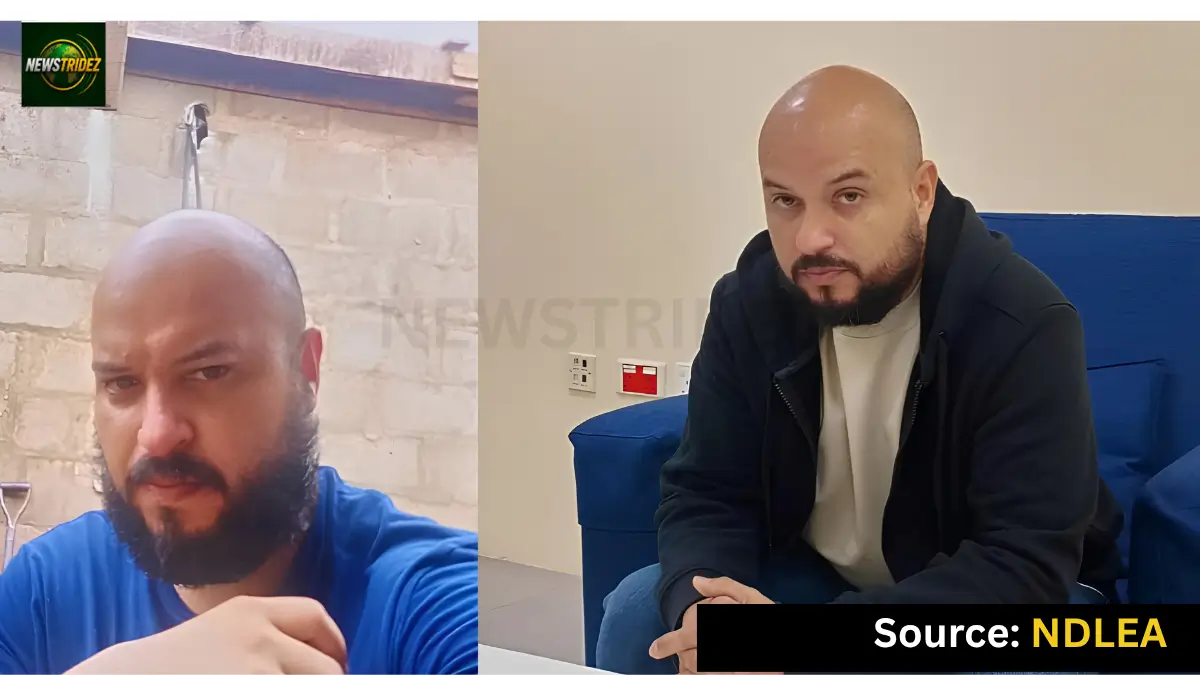
The photographs, according to the NDLEA, showed Loaiza wearing a blue laboratory coat and standing beside equipment that investigators considered consistent with methamphetamine production. Location information attached to the photographs then led investigators to a property under construction at Isiata Ugoni Okposi in Ebonyi State.
Data reviewed by Newstridez shows that the investigation moved from the Oyo arrest to the Ebonyi property within weeks. NDLEA operatives searched the property on August 30 and found what investigators described as suspicious structures, strong chemical odours and other signs pointing to clandestine laboratory activity.
The property was linked to John Samuel Ivo Okike, according to the agency. Interviews with a site engineer and caretaker reportedly revealed a temporary structure erected over the septic tank area at the rear of the building, while witnesses also reported persistent chemical smells coming from the premises.
Investigators also recovered a CCTV memory card from the property. The NDLEA said forensic examination showed a foreign national wearing a blue laboratory coat who matched the photograph of Loaiza, while Okike appeared repeatedly in the footage.
The agency said the CCTV footage captured the movement of chemicals and laboratory equipment from the property at about 9pm on August 21. It alleged that Okike directed the operation alongside other people who helped move the materials away from the site.
Acting on further intelligence from a confidential source, NDLEA operatives reportedly traced the relocated materials to an isolated house in a neighbouring community. The property was allegedly under the custody of Nwanja Obasi, according to the agency.
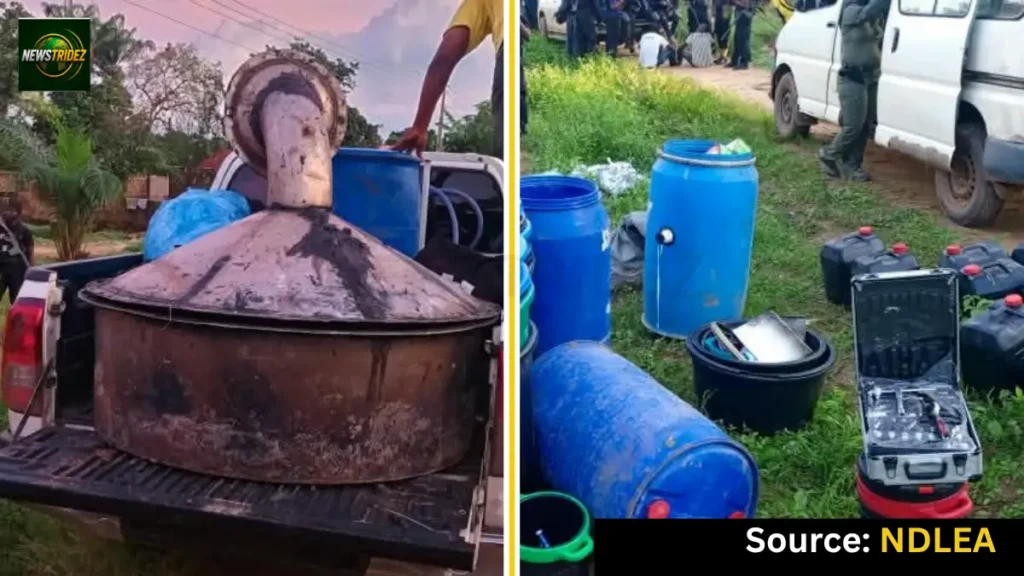
A subsequent raid produced laboratory equipment and chemicals which the NDLEA said were connected to methamphetamine production. The agency listed acetone, toluene, ethanol, hydrochloric acid, P2B and other substances among the materials recovered during the operation.
The agency also reported recovering dehydrators, condensers, a reaction pot, pumps, weighing scales, mixers, drums, gas burners and other laboratory equipment. Investigators reportedly found loose methamphetamine inside a white cloth sieve embedded in one of the dehydrators.
The discovery adds to a series of major methamphetamine investigations carried out by the NDLEA in 2026. In May, operatives arrested three Mexican nationals and seven Nigerian collaborators at a forest hideout in Ogun State, according to the agency. The operation later expanded into investigations involving other suspected members of the network.
The pattern has drawn attention because investigators say some of the laboratories operate away from major cities. Forests, farms and properties under construction can provide concealment while equipment and chemicals move between locations, making detection more difficult for law-enforcement agencies.
The NDLEA has previously described the emergence of industrial-scale methamphetamine laboratories in Nigerian forests as a growing security and public-health threat. The agency said international drug networks have increasingly worked with Nigerian criminal groups to establish production facilities locally.
The wider concern for Nigeria goes beyond the drugs recovered during individual raids. Large-scale production could increase the availability of synthetic drugs within the country, create new routes for international trafficking and expose rural communities to criminal networks seeking places where their activities can remain hidden.
For communities around suspected laboratory sites, the reported presence of strong chemical smells and unusual structures also raises safety concerns. Some of the substances used in clandestine drug production can pose risks when improperly stored or handled, making early detection important for both law enforcement and residents.
NDLEA Chairman and Chief Executive Officer Brig Gen Mohamed Buba Marwa (retd.), who spoke through the agency’s Director of Media and Advocacy, Femi Babafemi, warned that Nigeria would not become a safe haven for international drug cartels seeking to relocate their laboratories.
Marwa also praised officers involved in the investigations across Ogun, Oyo and Ebonyi states. He said the agency would continue following the evidence until it identifies the wider network, its financiers and local collaborators.
The NDLEA said the investigation into the network remains active. The agency is also seeking information that could help identify other people involved in the movement of chemicals, laboratory equipment and finished drugs connected to the suspected cartel.
The agency has urged Nigerians, especially residents of rural and forested communities, to report suspicious activities, unfamiliar structures and unusual chemical odours. It provided its toll-free line, 080010203040, for members of the public who may have information about suspected drug operations.
As at the time of filing this report, the NDLEA meth lab investigation had produced the arrest of Mexican national Arturo Carrera Loaiza, the dismantling of a suspected industrial-scale facility in Ebonyi and the recovery of chemicals and laboratory equipment. The agency has yet to announce the final outcome of its wider investigation.
The next stage will focus on tracing the remaining members of the suspected network, establishing the roles of local collaborators and determining whether additional laboratories or storage locations remain active. The NDLEA said it would continue pursuing the network and anyone who financed or supported its operations.