Former governor Jim Nwobodo has filed a N20bn libel suit against Lagos businessman Basil Ogbuanu in Enugu, alleging media reports damaged his reputation over a disputed land deal.
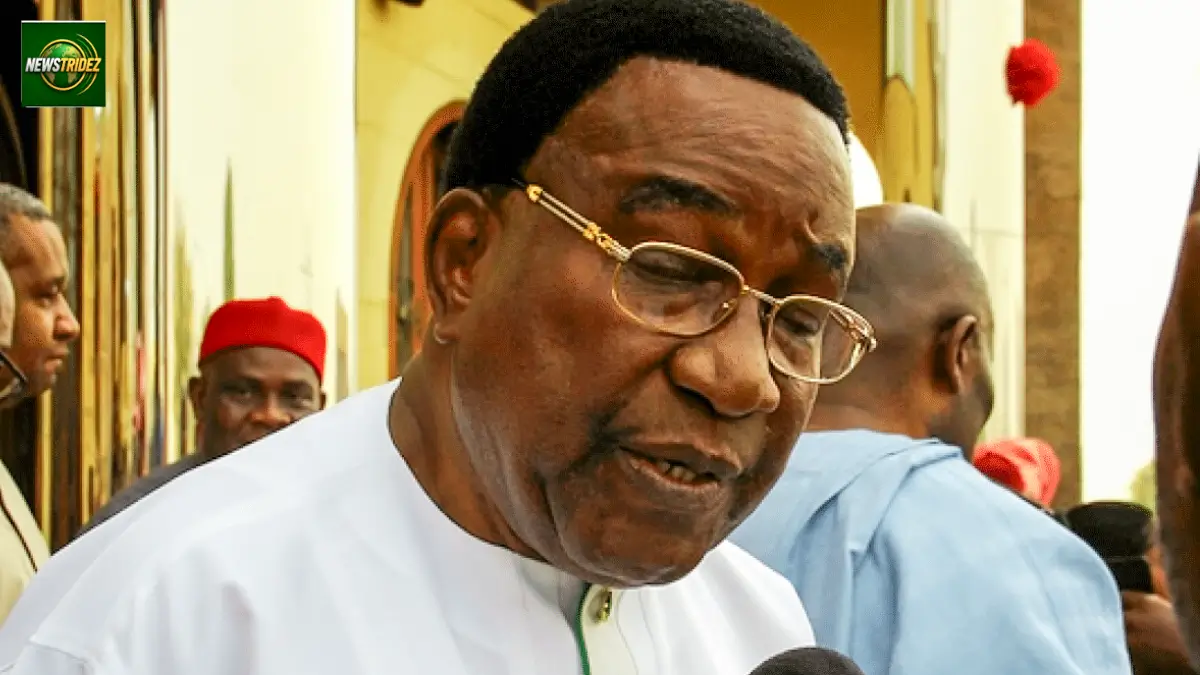
ENUGU, NIGERIA — Former Anambra State governor Jim Nwobodo has filed a N20bn libel suit against Lagos businessman Basil Ogbuanu before an Enugu High Court, alleging that publications linked to a disputed land transaction damaged his reputation and caused psychological distress.
According to court documents reported by Vanguard, Nwobodo joined five other defendants in the suit, including ThisDay newspaper, and is seeking N20bn in damages, public apologies and an injunction against further publication of what he considers defamatory material.
The dispute centres on land in Independence Layout, Enugu, which Nwobodo said he acquired through his company, Linkana Hotels Ltd, in 1976, before he became governor of the old Anambra State in 1980. He said he later divided part of the property into plots and sold four plots to Ogbuanu for N235m.
Newstridez reviewed the available court-related reports and found that the dispute is not simply about the sale of the property. Nwobodo alleges that Ogbuanu proceeded with development on the land before the required government documentation and approvals were completed, after which authorities demolished structures erected on the property.
Nwobodo, 86, told the court that Ogbuanu subsequently blamed him for the outcome and embarked on what he described as a media campaign against him. The former governor said publications arising from the dispute had damaged his name and caused him serious psychological distress.
The former governor is asking the court to restrain Ogbuanu, the media defendants and anyone acting on their behalf from publishing further material he considers defamatory or offensive. He is also seeking orders compelling the defendants to retract the publications and issue written apologies in at least three national newspapers, including ThisDay and The Guardian.
Nwobodo also wants the court to award N20bn in damages against the defendants jointly and severally. The claim represents the financial compensation he is seeking for the alleged harm to his reputation arising from the publications.
In his statement, Nwobodo rejected any suggestion that his financial standing depended on political office. He told the court that he had built substantial business interests before entering politics and identified companies including Links Group Ltd, Jimson Nig Ltd and Linkana Ltd as part of his earlier business interests.
He further claimed that he was among the few Nigerian politicians who left public office poorer than when they entered it. The former governor said he acquired the disputed property years before becoming governor and intended to develop it for leisure and hospitality purposes.
The land issue became complicated after the government introduced the Certificate of Occupancy system following the Land Use Decree of 1978, according to Nwobodo’s account. He said the original property had a deed of lease issued to Linkana Hotels Ltd in 1976 and required new documentation before the transaction could be fully regularised.
Nwobodo said he warned Ogbuanu and other buyers not to begin development until the relevant government documentation and approvals were secured. He alleged that Ogbuanu ignored that advice and started developing the plots before the process was completed.
The former governor told the court that the development later ran into problems when government authorities demolished structures on the property. He argued that Ogbuanu should have waited for the necessary approvals rather than proceeding with construction.
Nwobodo also disclosed that Ogbuanu had conducted searches at the Enugu Lands Registry before completing the purchase. According to his account, those searches showed that the larger property had been registered in the name of Moss Island Ltd, after the property was transferred from Linkana Hotels Ltd for family and inheritance-related reasons.
He said he explained the relationship between the two companies to Ogbuanu and that the businessman accepted the explanation before paying for plots R/18, R/19, R/20 and R/21.
Nwobodo further stated that Ogbuanu received vacant possession of the four plots but was advised not to make improvements until the government issued the Certificate of Occupancy for the larger property and approved the estate’s development plan.
The former governor said he was willing to refund the N235m paid by Ogbuanu if the businessman did not want to wait for the documentation and approvals to be completed. His account forms a central part of his response to the allegations that followed the dispute.
The suit also names media organisations because Nwobodo alleges that reports about the dispute amplified damage to his reputation. He is therefore seeking not only financial compensation but also the removal or correction of the publications he considers defamatory.
Data reviewed by Newstridez shows that the N20bn claim is a demand made by Nwobodo in the lawsuit and does not represent an amount already awarded by the court. The case must still go through the judicial process before the court determines whether the claimant is entitled to any damages.
That distinction is important as the dispute moves through court. A libel claim requires the claimant to establish the relevant legal elements, while the defendants will have an opportunity to respond to the allegations and present their own evidence.
The case also highlights the long-running challenges surrounding land ownership and property development in Nigerian cities. Enugu, like other major urban centres, has seen disputes involving titles, development approvals, land transfers and competing claims of ownership.
For residents and property investors, the dispute is another reminder of the importance of conducting proper searches, confirming ownership documents and securing relevant approvals before beginning major development projects.
The political history of Nwobodo adds another layer to the case. He served as governor of the old Anambra State during the Second Republic and later held other public positions, making his reputation a significant part of the argument contained in the lawsuit.
Nwobodo’s claim that publications damaged his standing is therefore tied to a public career spanning several decades. He is asking the court to protect that reputation through damages, injunctions and published apologies.
Meanwhile, the allegations contained in the suit remain Nwobodo’s claims until the defendants respond and the court determines the issues. The filing itself does not establish that Ogbuanu or the media organisations committed libel.
The defendants are expected to have an opportunity to present their defence, challenge the claimant’s evidence and explain their positions on the publications and the underlying land dispute.
As at the time of filing this report, Nwobodo was seeking N20bn in damages from Ogbuanu and five other defendants, alongside retractions, public apologies and an order stopping further publication of material he considers defamatory.
The Enugu High Court will now determine the issues raised by the parties as the case progresses. The central questions will include the circumstances surrounding the disputed land transaction, the publications complained about and whether the claimant can establish the legal basis for the reliefs he is seeking.