“Resign Now!” — ADC Fires INEC Boss After Leadership U-Turn Sparks Fresh Political Storm
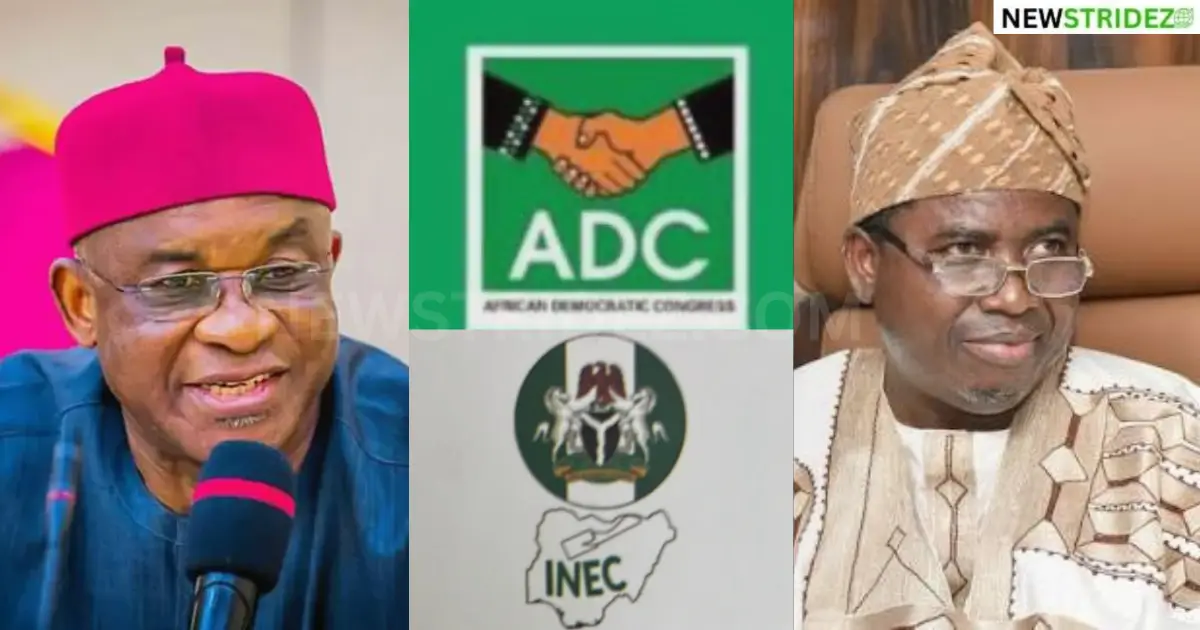
INEC ADC crisis deepens as Nigeria’s electoral body reportedly withdrew recognition of the African Democratic Congress executive led by David Mark, prompting the party to demand the resignation of INEC Chairman, according to reports by Pulseng.
What Happened
According to reports, the Independent National Electoral Commission initially recognised the leadership of David Mark as head of the ADC following internal restructuring aimed at repositioning the party ahead of the 2027 elections.
However, in a dramatic twist, INEC later moved to withdraw that recognition, triggering fresh tensions within the opposition party and raising questions about consistency in the electoral body’s decisions.
ADC Fires Back
Reacting to the development, the ADC leadership strongly criticised INEC, calling the move unacceptable and politically damaging.
“The INEC Chairman should resign,” the party said, alleging that the commission’s actions undermine democratic credibility.
Speaking further, the party argued that the reversal creates confusion within the political space and could weaken opposition coordination ahead of the 2027 elections.
"We demand the immediate resignation or sack of the INEC chairman, Professor Amupitan and all his national commissioners. We are convinced that they are incapable of conducting any credible elections…"
— @𝗼𝗻𝗲𝗷𝗼𝗯𝗹𝗲𝘀𝘀𝗯𝗼𝘆 (@OneJoblessBoy) April 2, 2026
– ADC Chairman, David Mark pic.twitter.com/VXBewqEWaX
Why This Matters
The ADC is not just any party right now.
- It has emerged as a major coalition platform for opposition figures preparing for 2027.
- The leadership of David Mark, a former Senate President, was seen as a stabilising force.
- The party has been positioning itself as a credible alternative to the ruling party.
This makes INEC’s reversal more than just an administrative decision—it has real political consequences.
Inside the Power Struggle
The crisis reflects deeper issues within the ADC:
- Ongoing internal leadership disputes
- Legal and procedural disagreements over party structure
- Competing factions seeking control ahead of elections
Earlier reports had indicated that INEC’s recognition of the Mark-led leadership helped resolve months of internal conflict.
Now, that resolution appears to have been undone.
Political Reactions and Implications
The situation is already generating reactions across political circles:
- Opposition supporters see it as a setback to coalition unity
- Critics argue it raises concerns about institutional neutrality
- Analysts warn it could affect preparations for upcoming elections
At the same time, the ADC insists the issue goes beyond party politics and touches on the integrity of Nigeria’s electoral system.
The Bigger Picture
With the 2027 general elections approaching, political alignments are becoming more intense.
The ADC had been gaining momentum as a coalition hub, bringing together influential figures seeking to challenge the status quo.
This latest dispute could either:
- Slow down that momentum
- Or further galvanise opposition voices
For now, the standoff between INEC and the ADC continues, with calls for accountability growing louder and political tension rising.
Whether this crisis reshapes the opposition landscape—or fades into another political dispute—will depend on what happens next.
Follow us on X(Twitter) @newstridez
INEC, ADC, David Mark, Nigeria politics, 2027 elections